Duration
3 Months
January 2022
March 2022
Team
Yongwen Dai
Fang Xu
Xuan Shen
Danyi Ma
Tools
Figma
Miro
Adobe suits
Notion
Project Overview
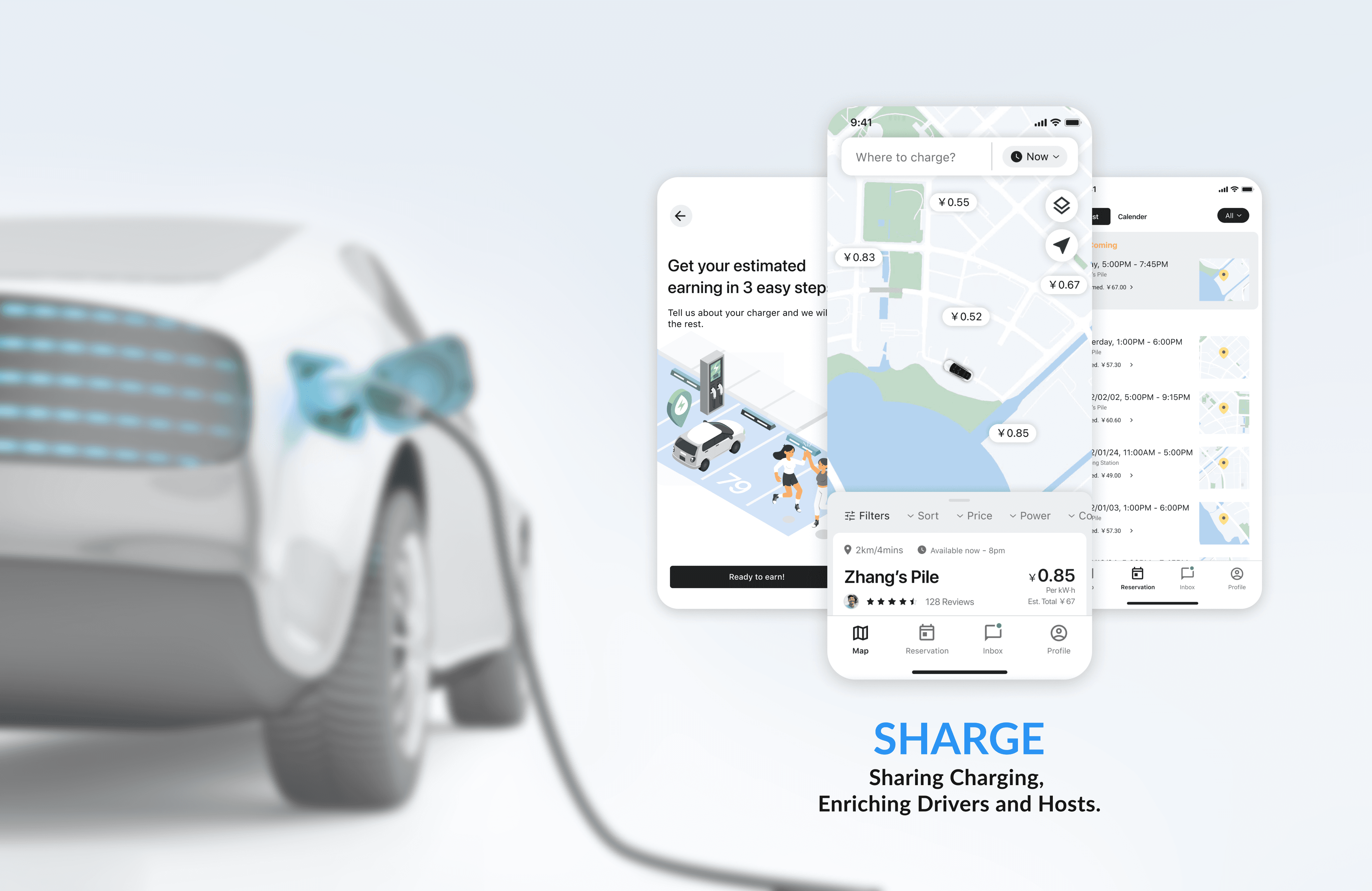
Sharge is based in China. It is a charging pile sharing platform for EV users to get their cars charged charged conveniently and economically.
The large-scale residential communities in Chinese cities have huge concentrated parking lots. It makes it possible for charge pile sharing to be popular. Also, residential electricity is much cheaper than commercial electricity, which makes charging more affordable compared to using public charging piles.
My Role
UX Research: Semi-structured interviews, competitive analysis, expert evaluation.
UX Design: Concept generation, wireframing, low-fi prototype, high-fi prototype.
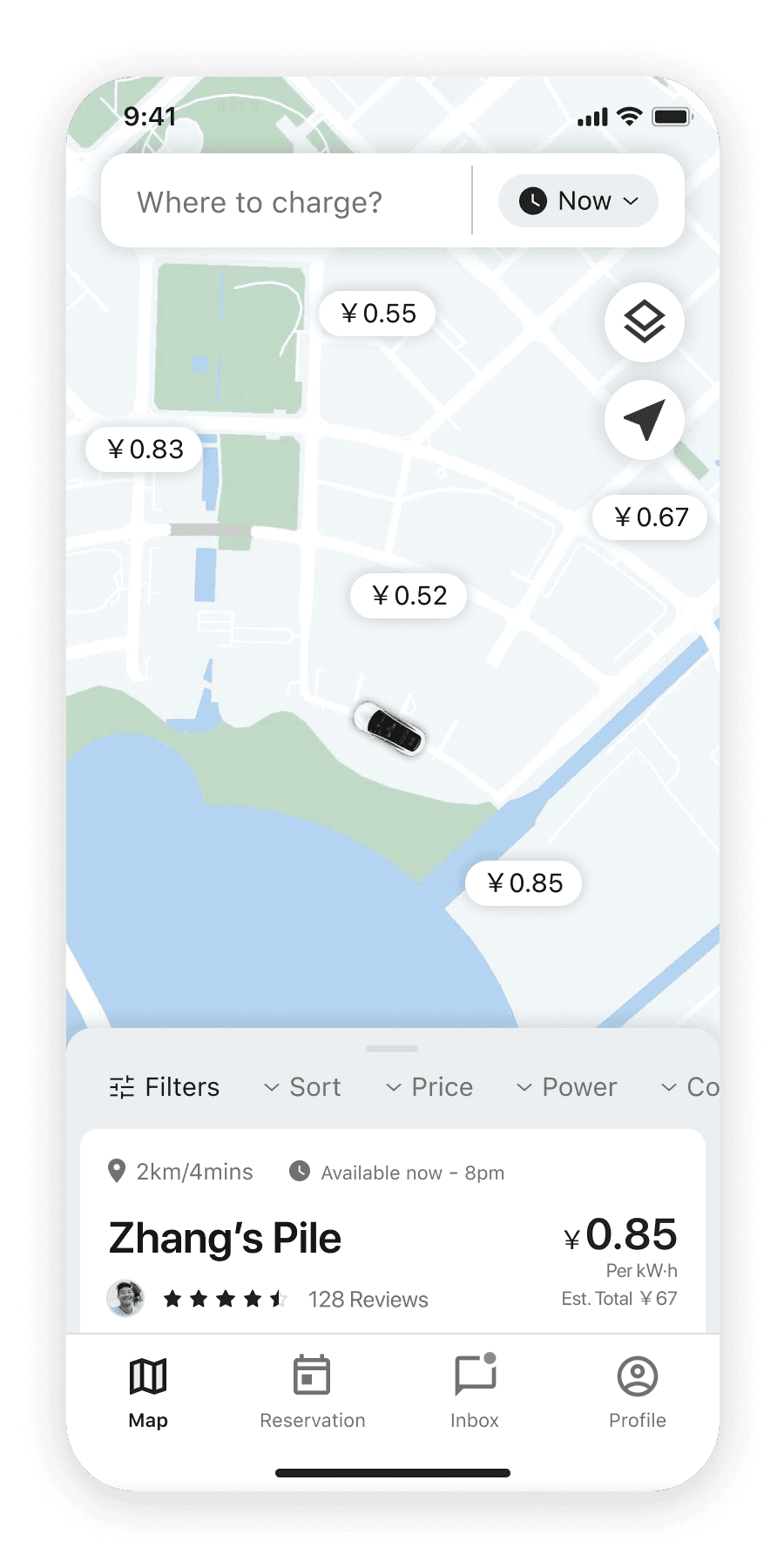
Schedule a Pile
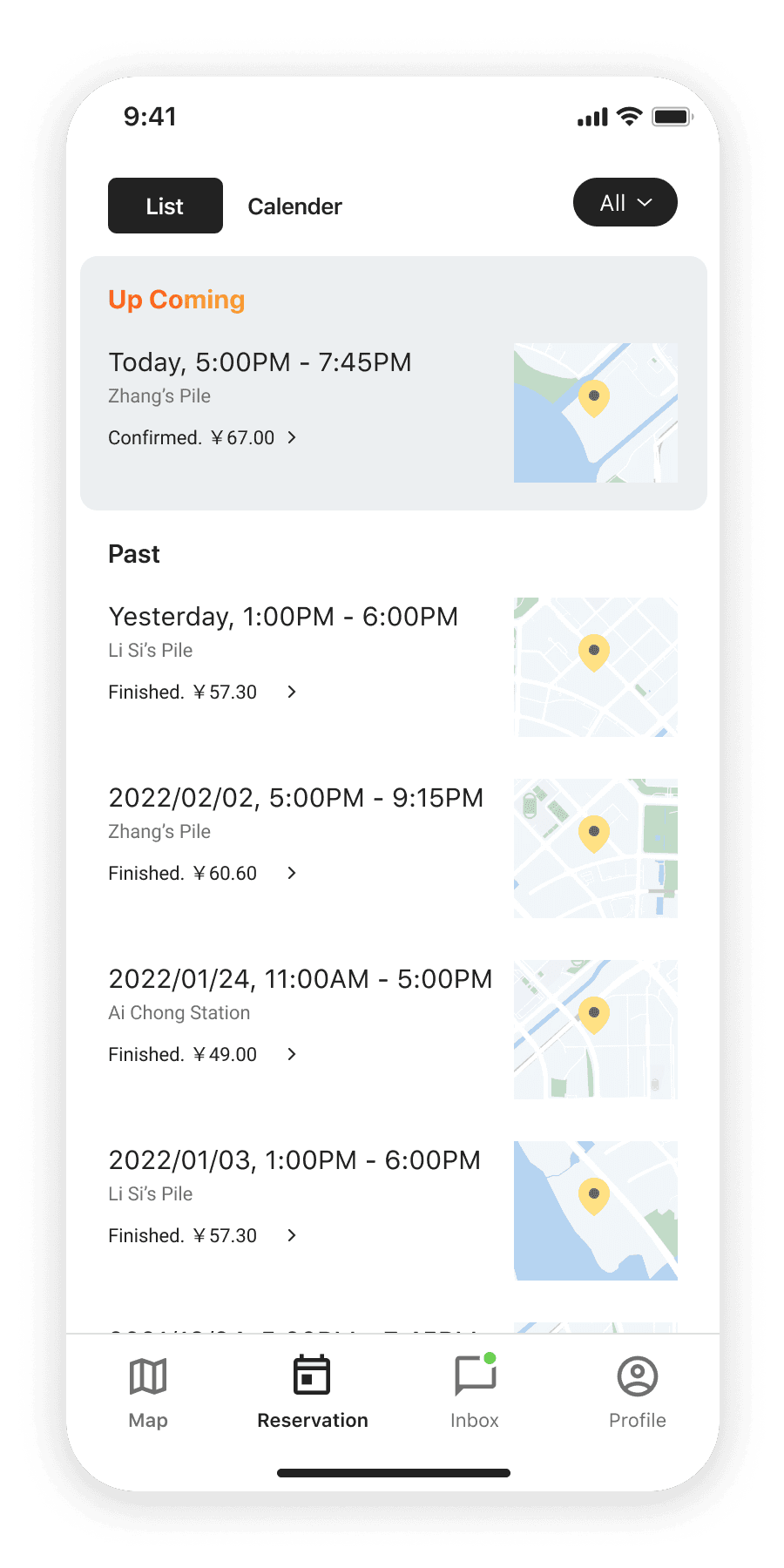
Get Charged
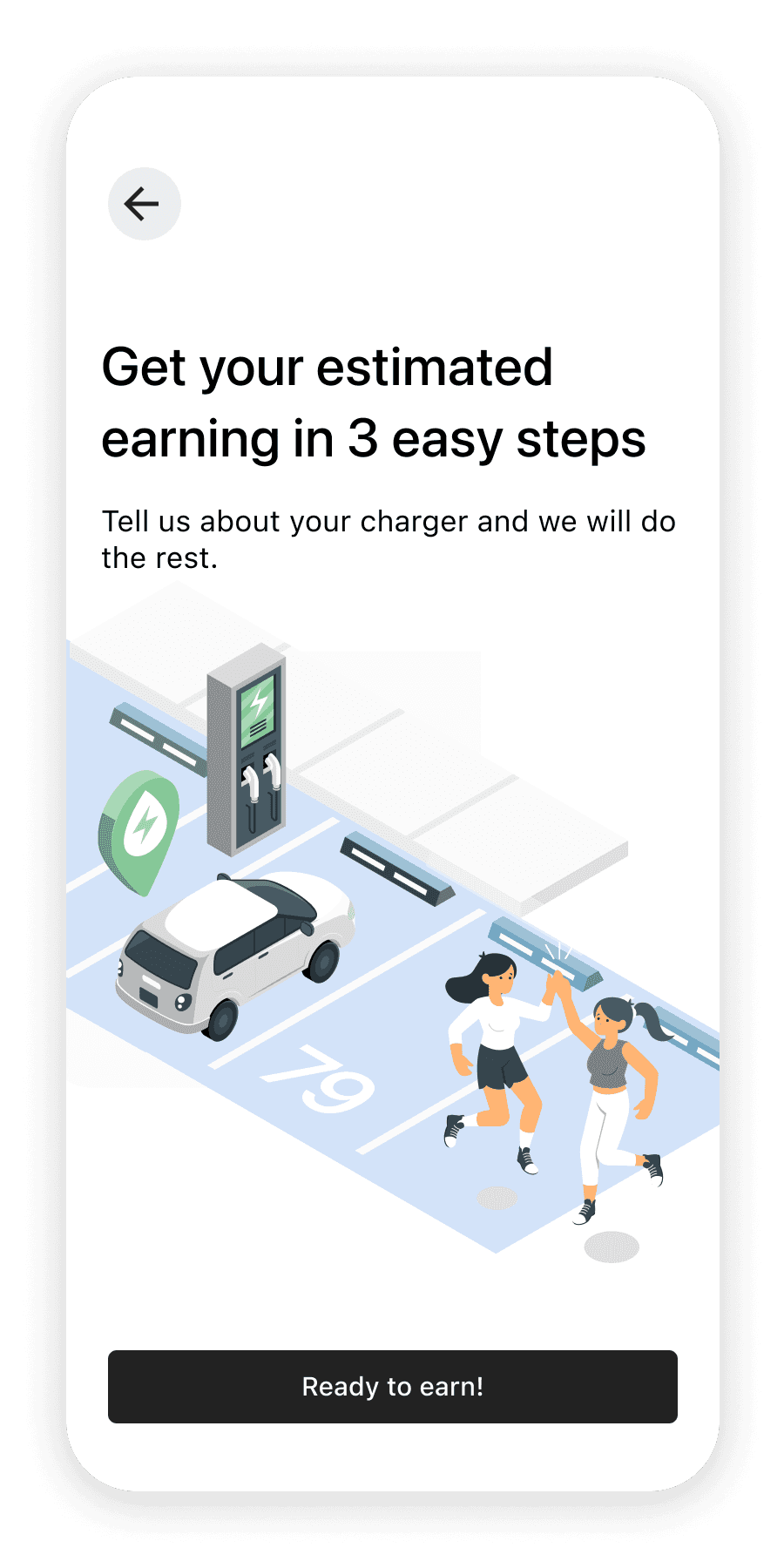
List a Pile (Host)
Project Review
Impacts
Increased User Satisfaction
Through two rounds of rigorous usability testing and iterative design enhancements, I boosted user satisfaction by an impressive 50%, resulting in a more user-friendly and effective product.
Decreased steps and time
We streamlined the charging process by reducing steps from 6 to 3, resulting in an 80% reduction in the average user's travel distance. This improvement significantly enhanced system efficiency.
Simplified Workflow
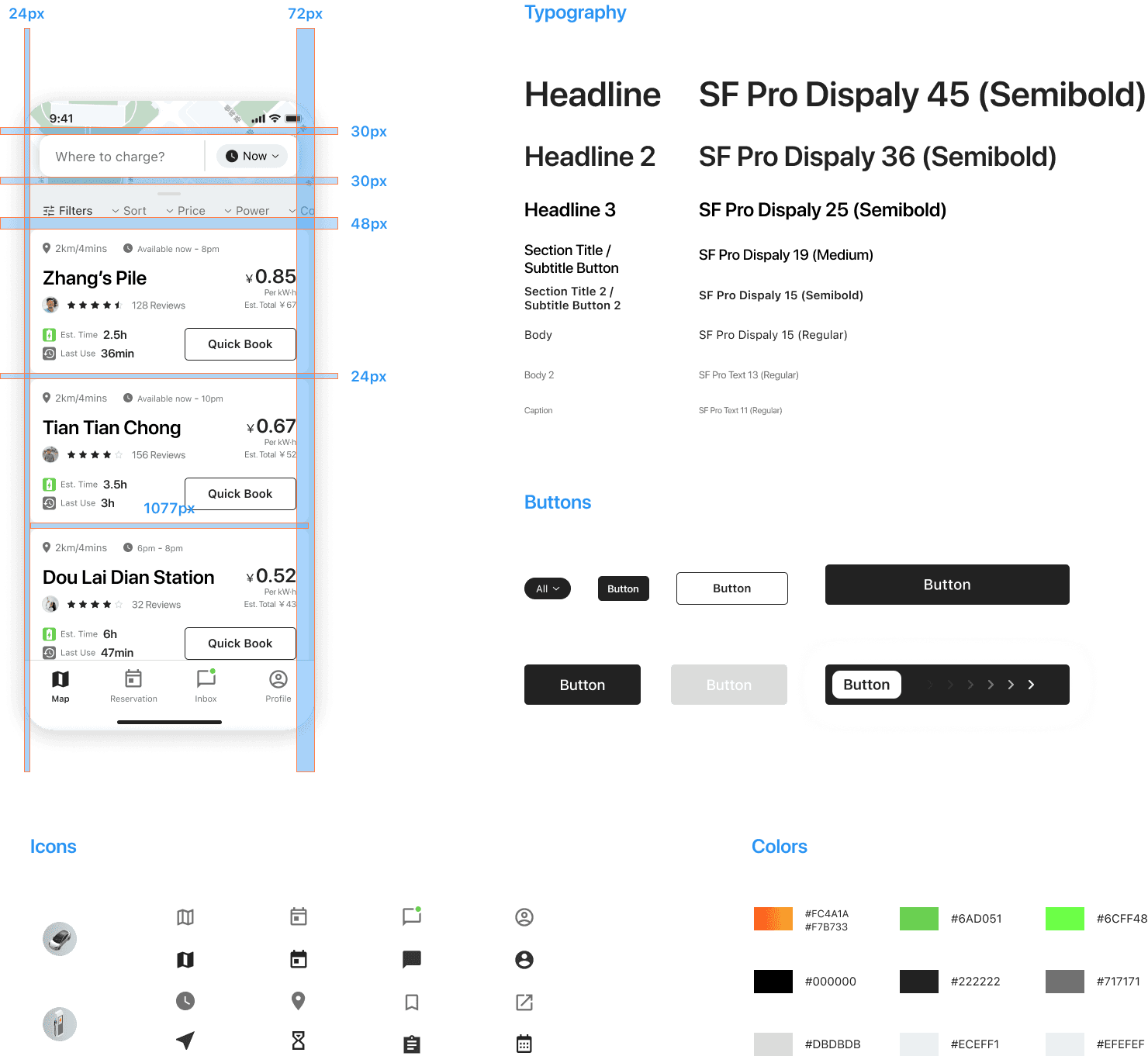
I led the build of design system. By establishing consistency in UI/UX elements and patterns across projects, we've reduced design time, streamlined prototyping, and enhanced collaboration.
Design Research
Define Problems
HOW IS EV USE IN CHINA?
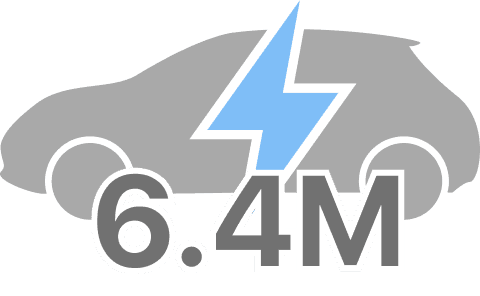
Begin to take shape
By end of 2021, there are 6.4million EV in China national wide, which takes 2.1% of total car numbers.
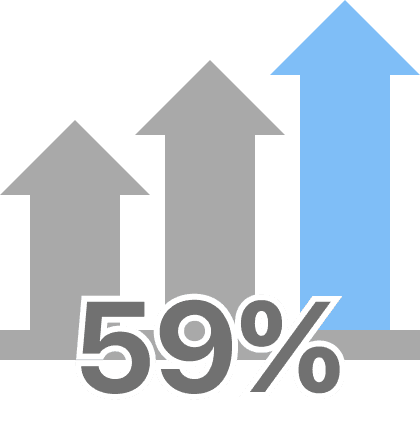
Increase rapidly
Compared with 2020, the EV growth in 2021 increased 59.25%.
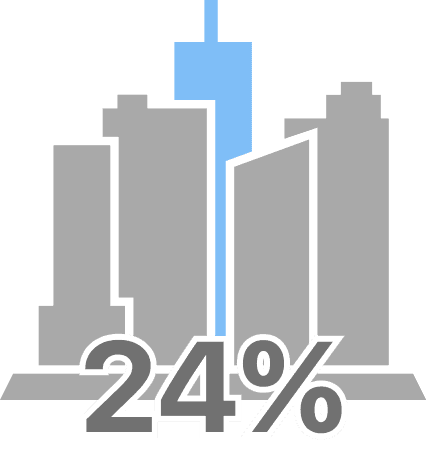
Popular in large cities
24% of the EV sales happen in the largest for cities(Beijing, Shanghai, Shenzhen, Guangzhou)
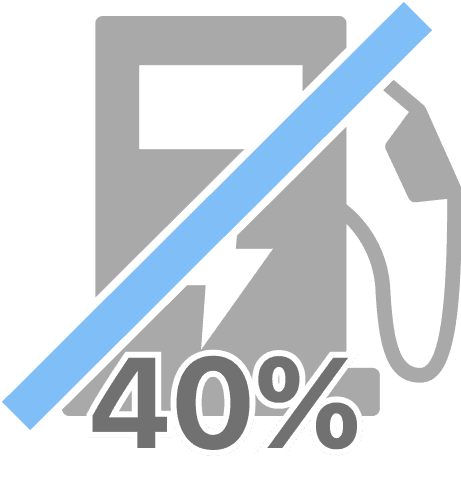
Insufficient personal pile
By 2021, there is a shortfall of 2.53 million private charging piles, accounting for 39.53% of total EV users.
Why don’t some EV users own their charging piles?
Difficulty in installation
The lack of their own parking spaces and the inability to install qualified wiring in their parking spaces prevent a large proportion of EV users from owning private charging piles.
No need for owning a pile
Due to work, life and other reasons, people in big cities are uncertain and mobile. Many of them rent apartments for living which makes them reluctant to invest in charging piles for the long-term use.
Expensive installation fees
Economical vehicles under ¥150K($23K) takes a large percent of EV sales in China. Charging pile installation cost itself is also an important reason to hinder many users.
Design Research
Possible Solutions
Economic Subsidies for Installation
Crowd-funding Pile Project
Private Pile Sharing Project
Design Research
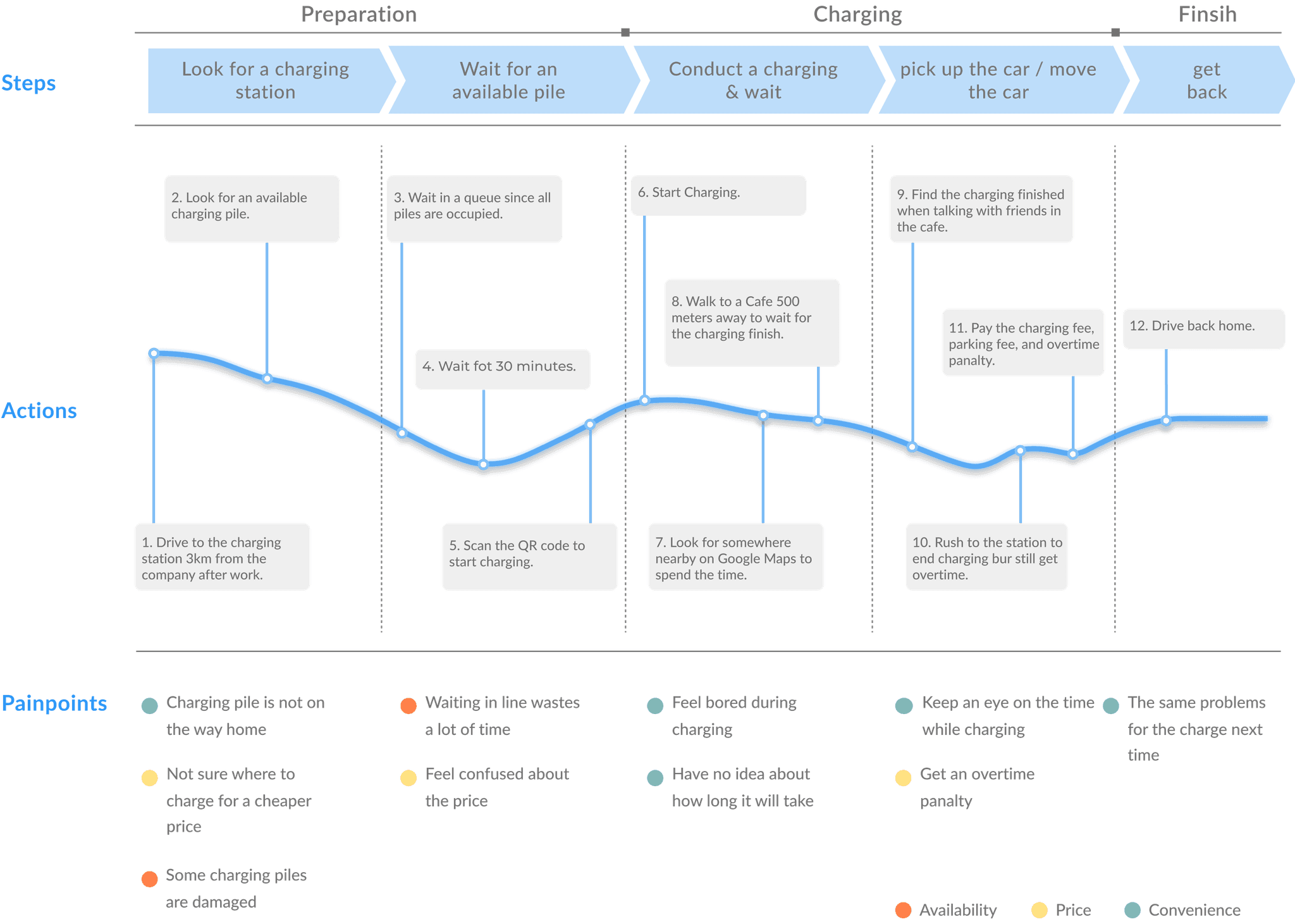
User Journey Map
Design Research
User Journey Insights
01
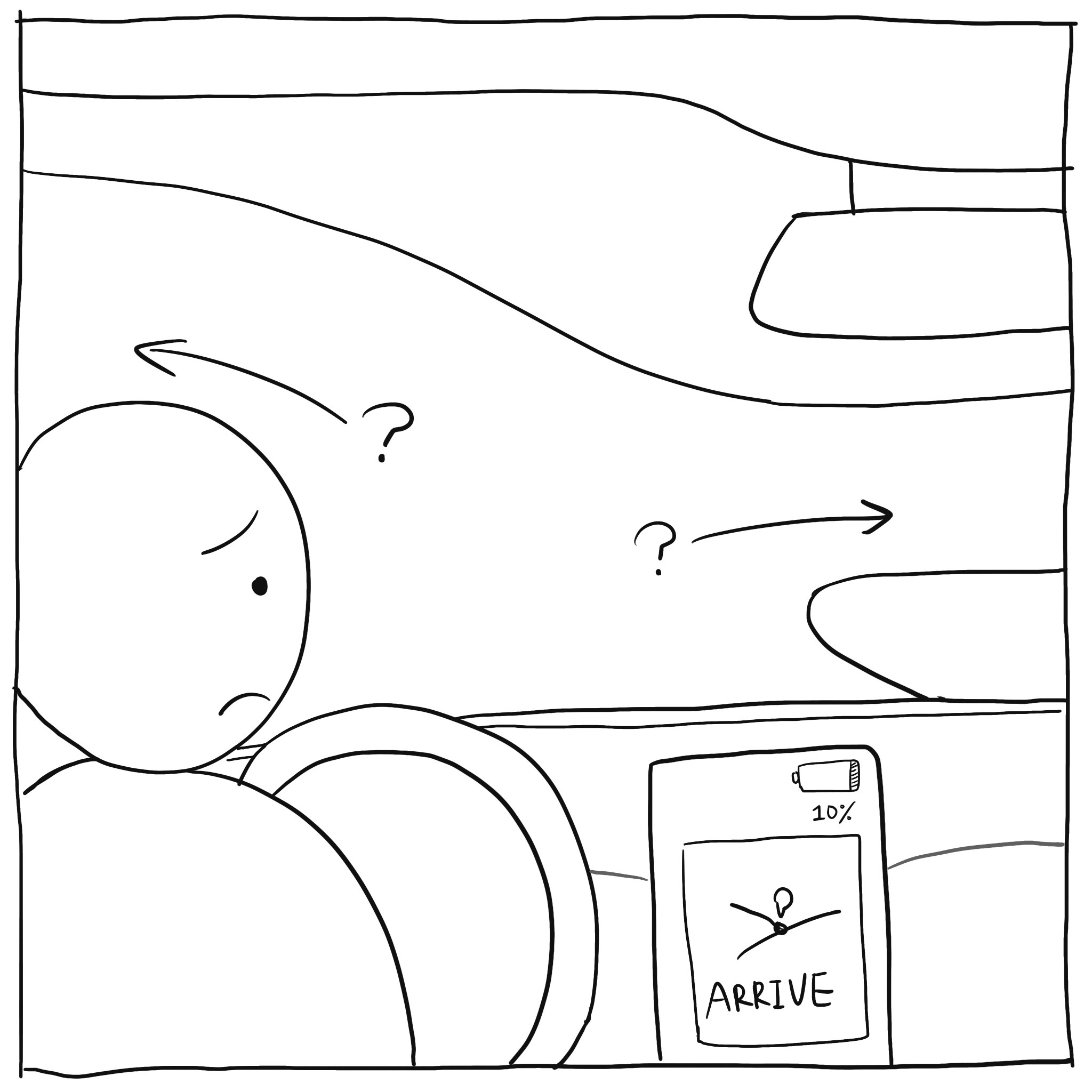
Last-mile Navigation to the charging pile in the parking lot is difficult for drivers.
Due to the limitations of existing satellite navigation system technology, accurate navigation within the residential area, especially in underground parking lots, is almost impossible.
02
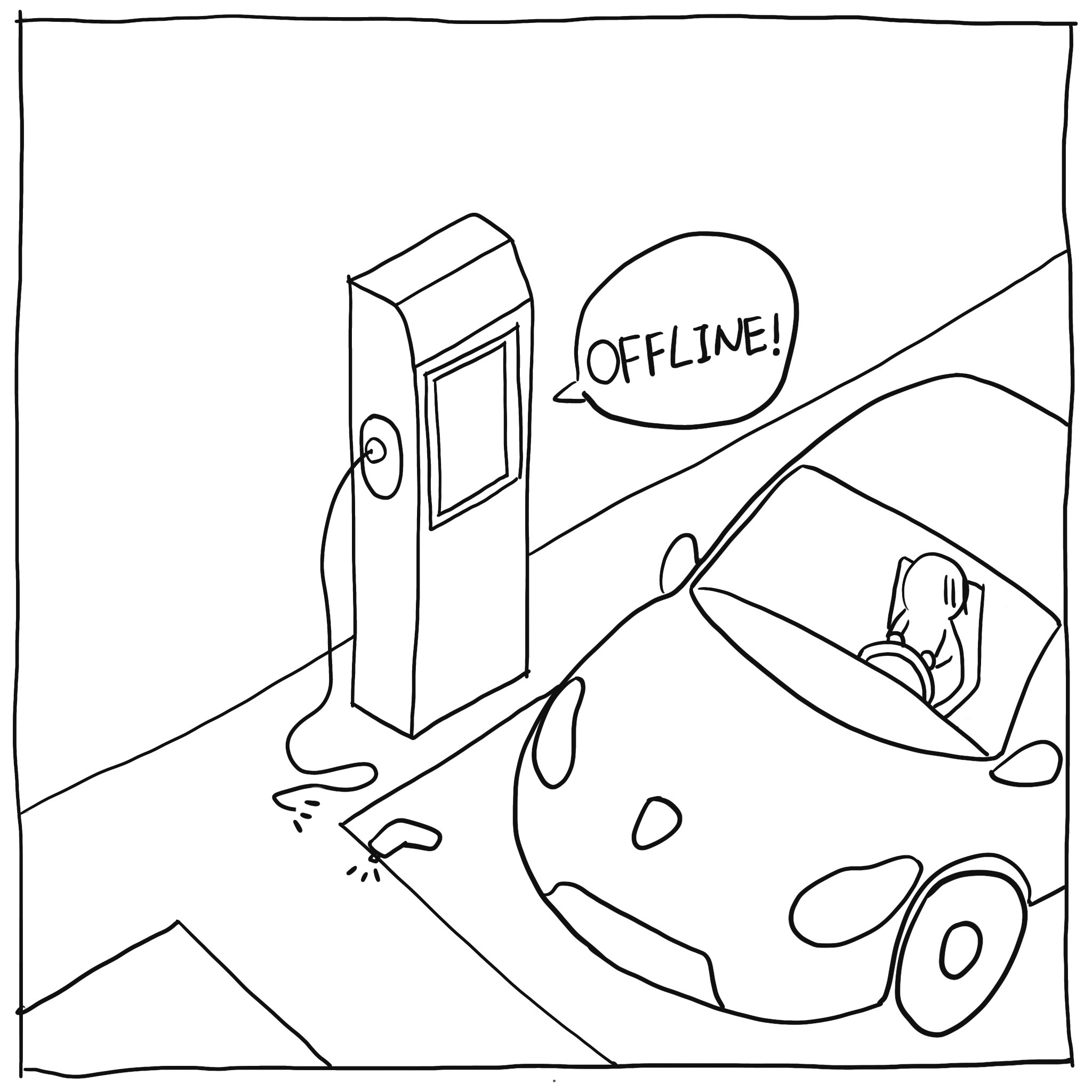
Feel bad when get to the public pile but find it doesn’t work
Many existing public charging piles are not well maintained now. Driving to a charging pile and then finding it doesn't work leaves consumers frustrated and angry.
03
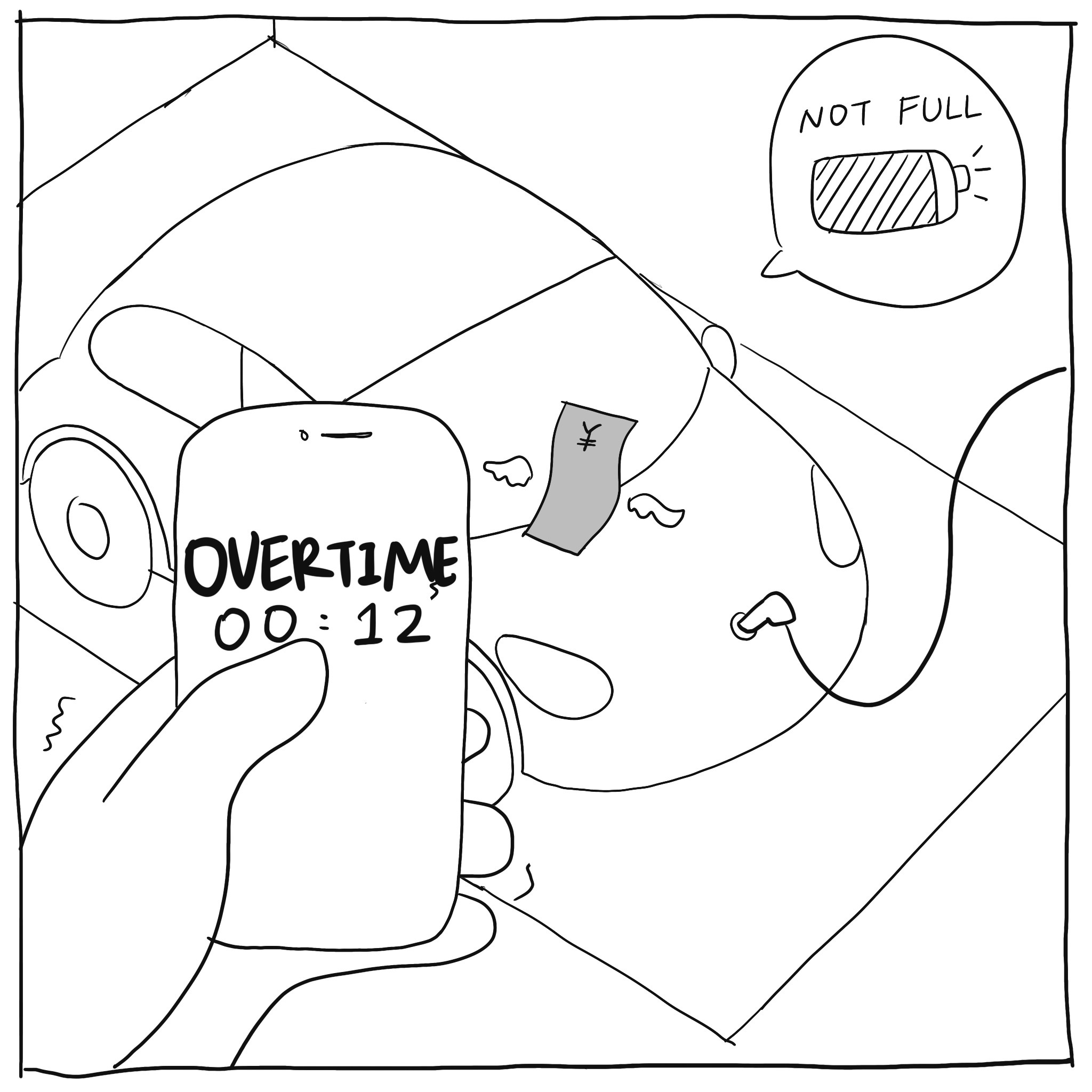
Overtime penalty brings huge psychological pressure to drivers during charging process.
Estimated charging time cannot always be very accurate. However, taking the space after charging is completed will bring about fines, which is much more expensive than charging fee.
04
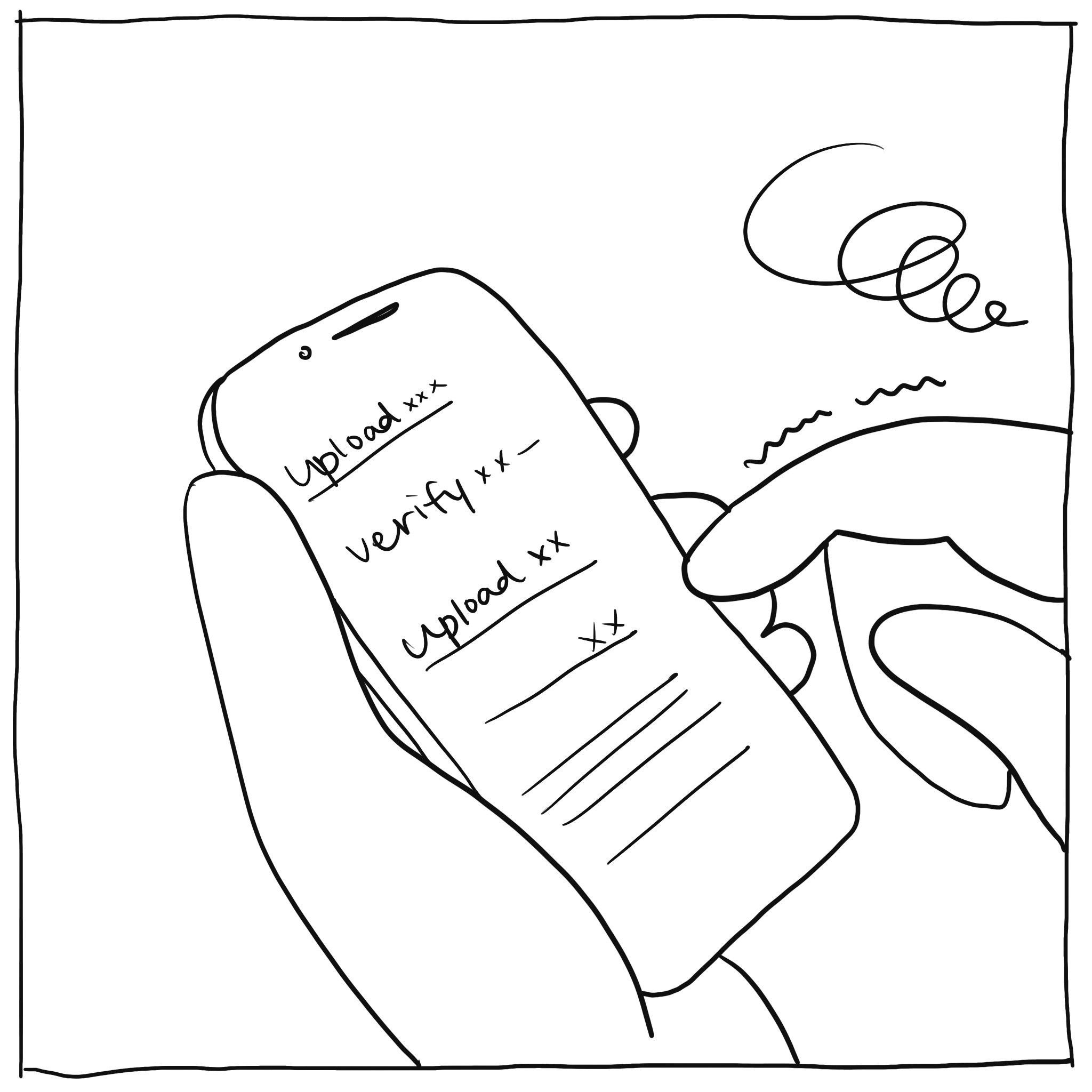
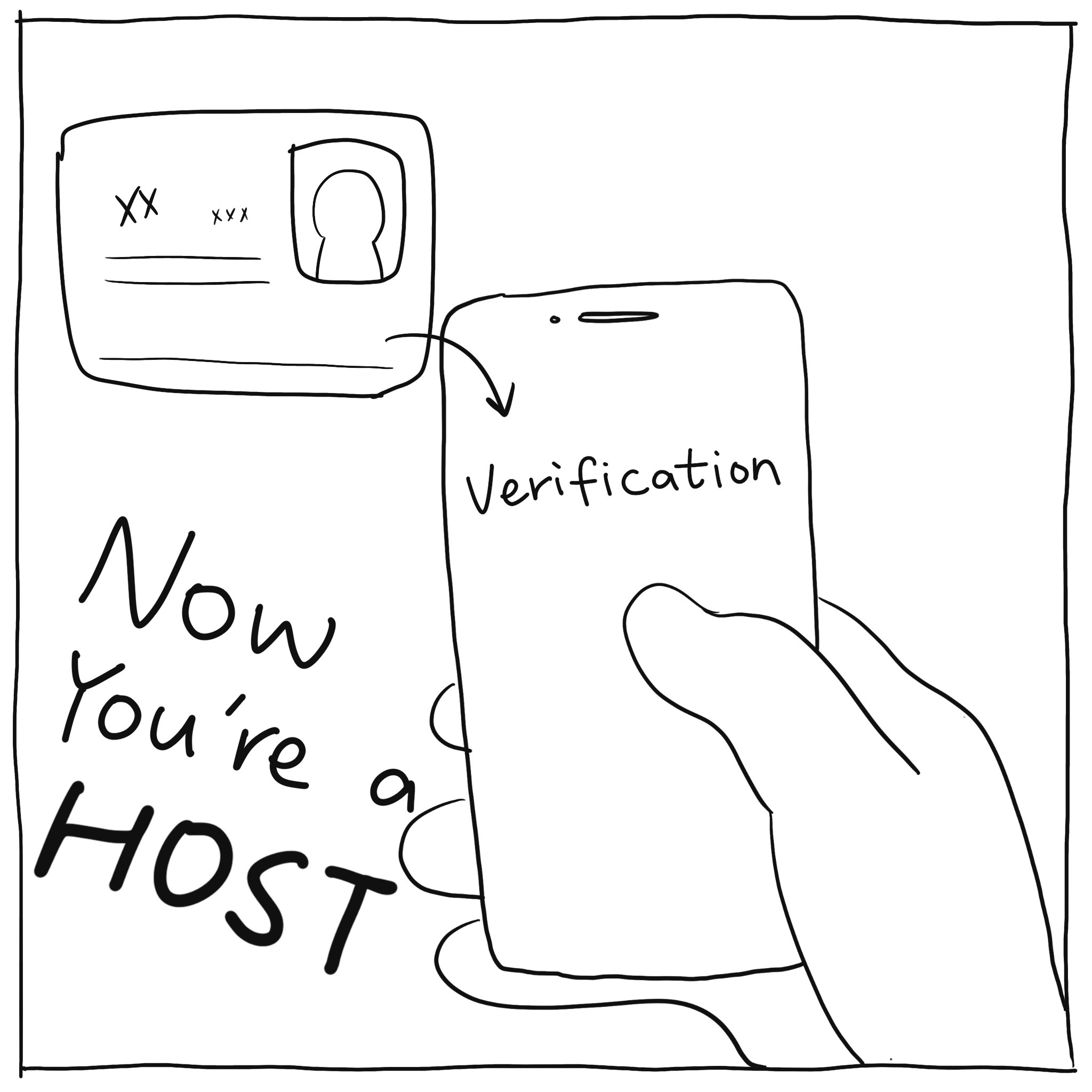
Listing charging piles is more troublesome than charging. An unfriendly listing procedure prevents pile owners from becoming hosts.
Uploading information and getting verified is a cumbersome process, which makes many pile owners reluctant to try.
Design Ideation
Brainstorming and Finalized Idea
After the discussion by our team, we finally came up with various solutions for different needs from both drivers and hosts.
01
Last-mile Navigation
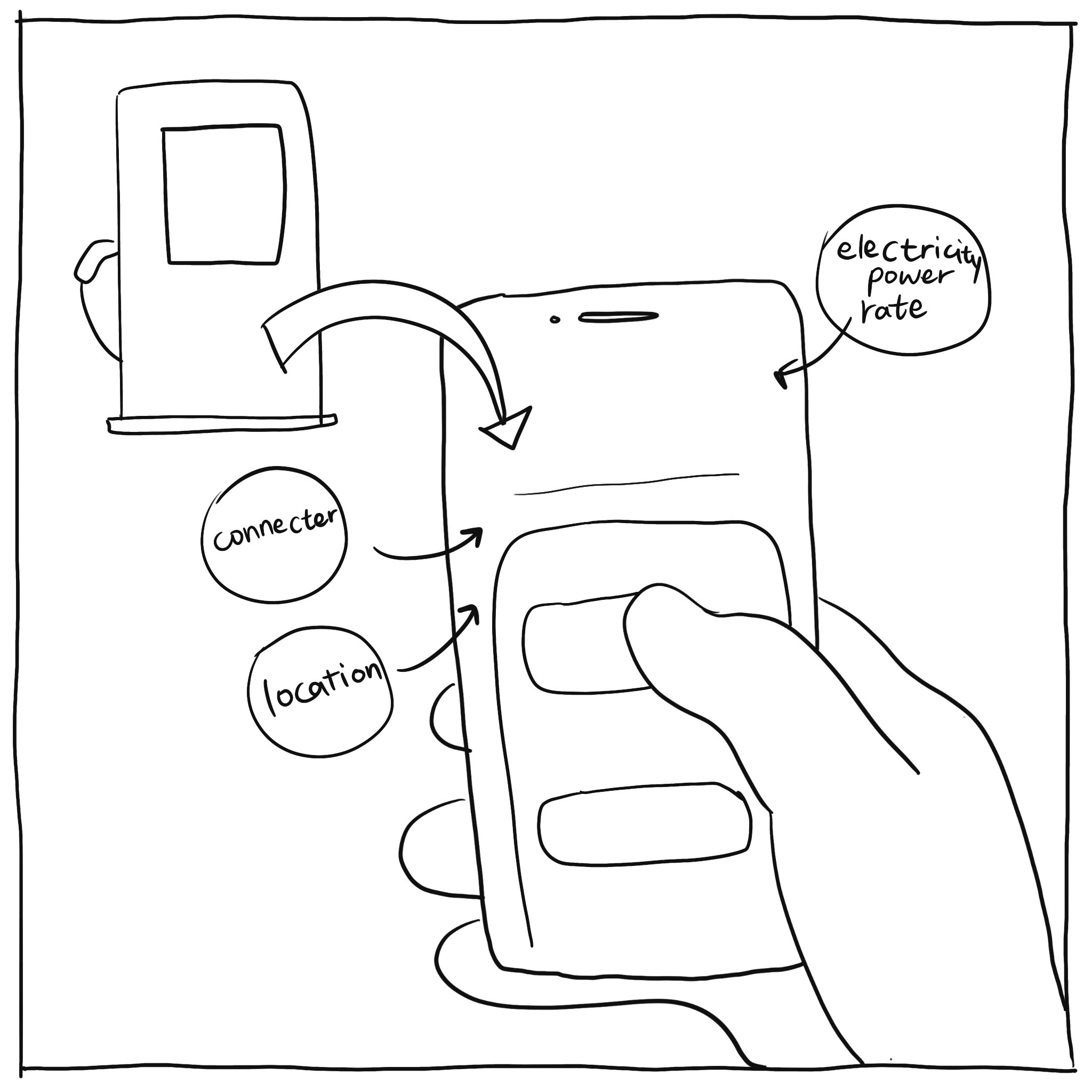
More specific location which includes nearby buildings to orient drives.
Encourage hosts to post the record of how to drive to the parking lot.
Send hosts big stickers of Sharge and paste them on the parking lot for better observation.
02
Damaged Pile
Show last use time on pile lists, cards since piles used more rencenlty are more likely to operate normally.
Show pile photos.
Show pile ratings and comments.
Let customers report damaged piles.
03
Penalty for Overtime
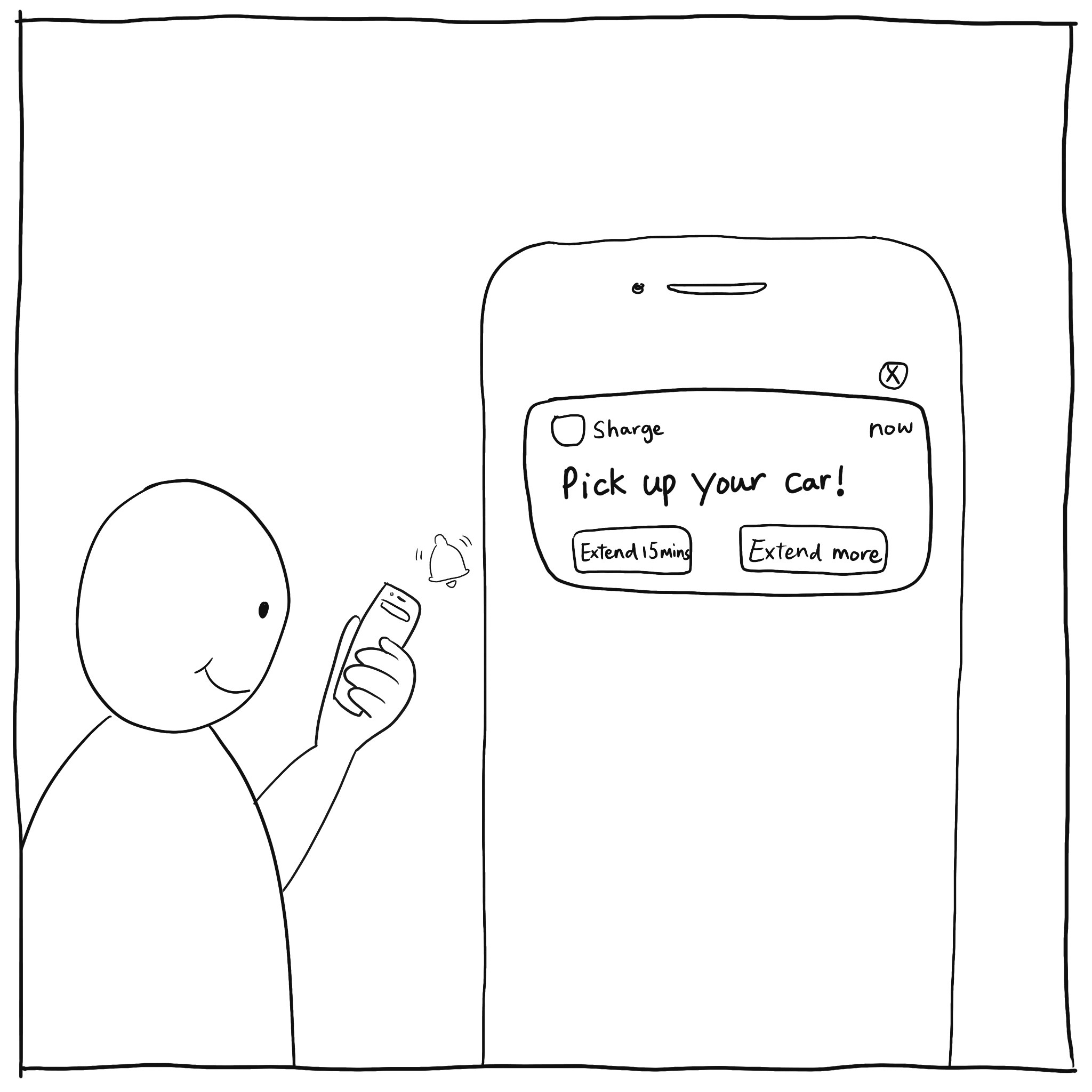
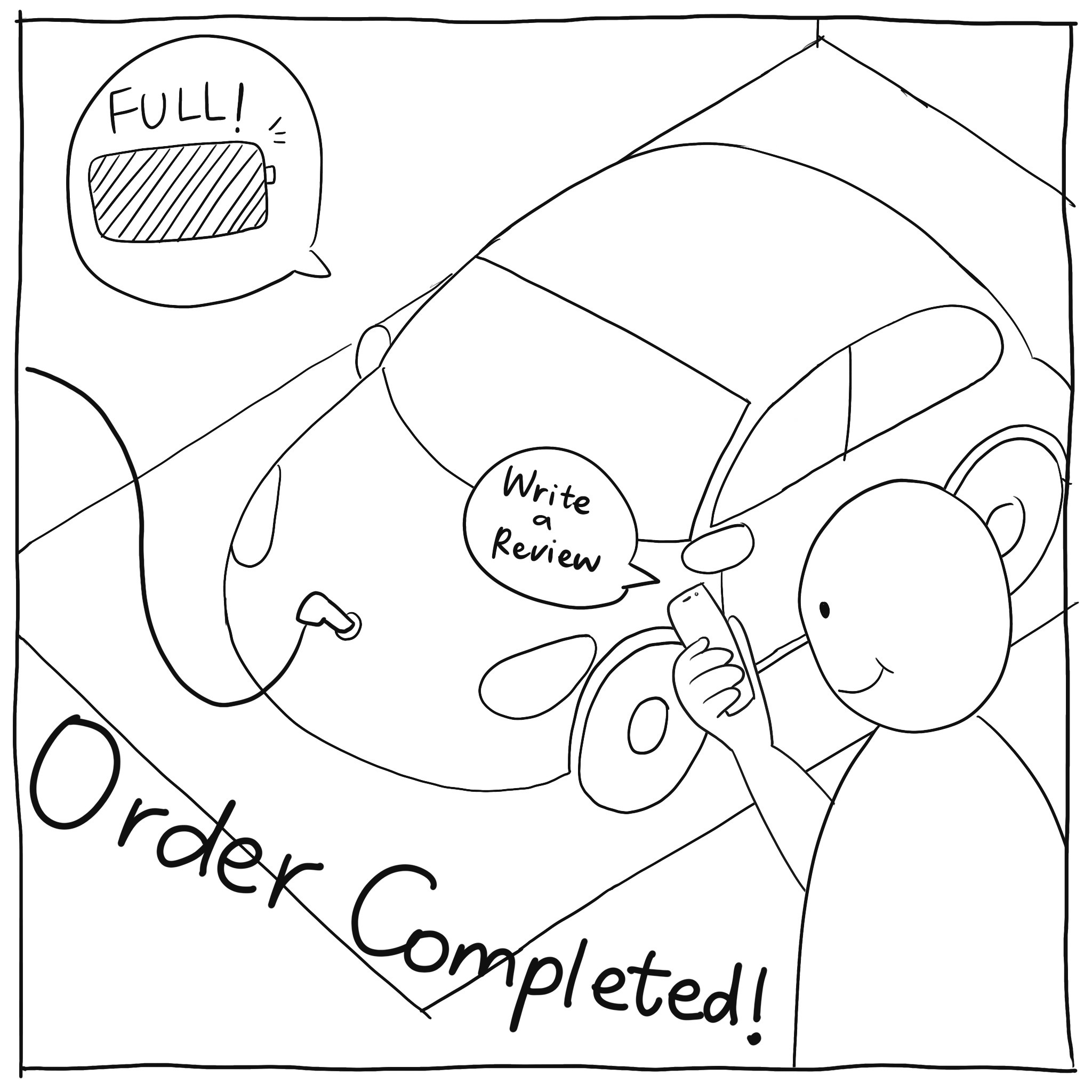
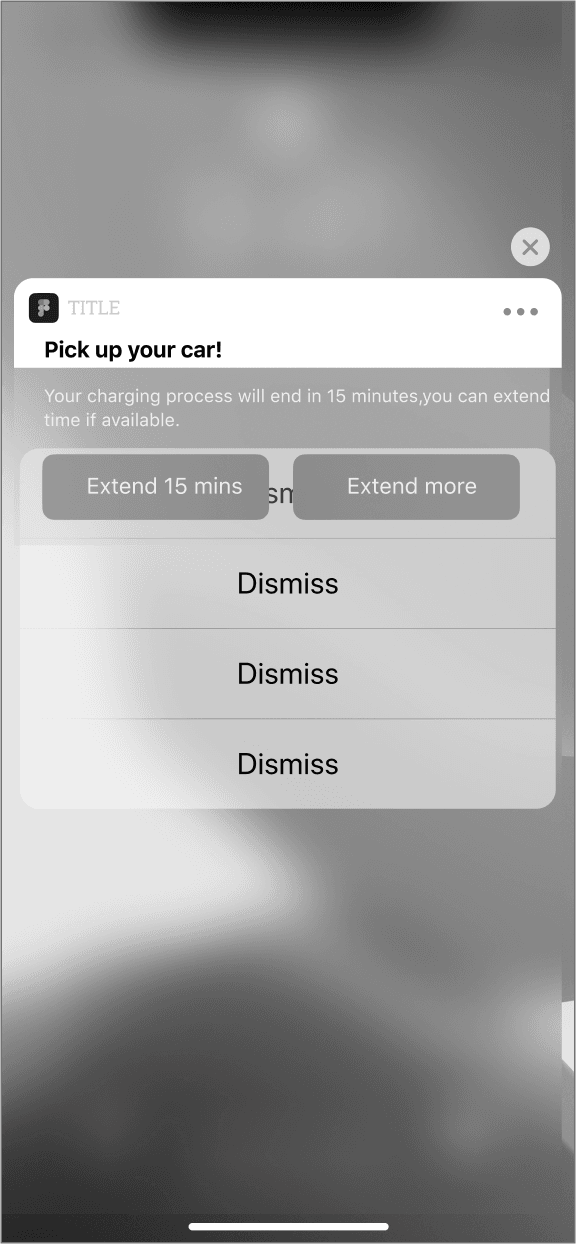
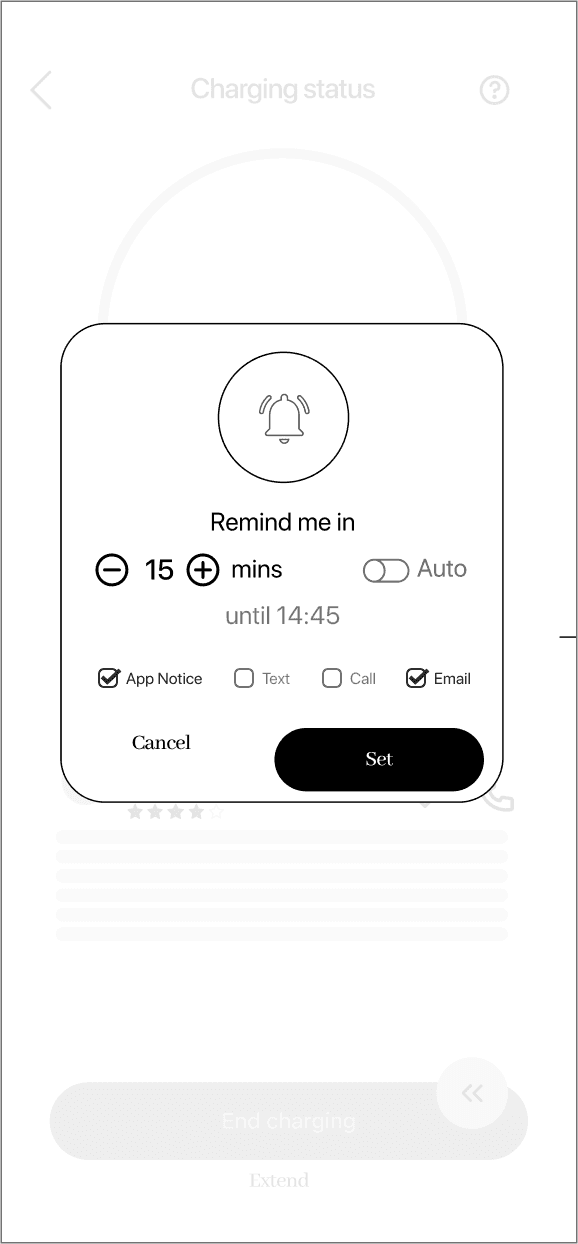
Extend time option on charging status page.
Show charging time left as the most eye catching text on chaging status page.
Manual reminder setting option on chargning status page.
Multiple methods Options for reminder, including system notice, text, email, and phone call.
04
Unwilling to List Pile
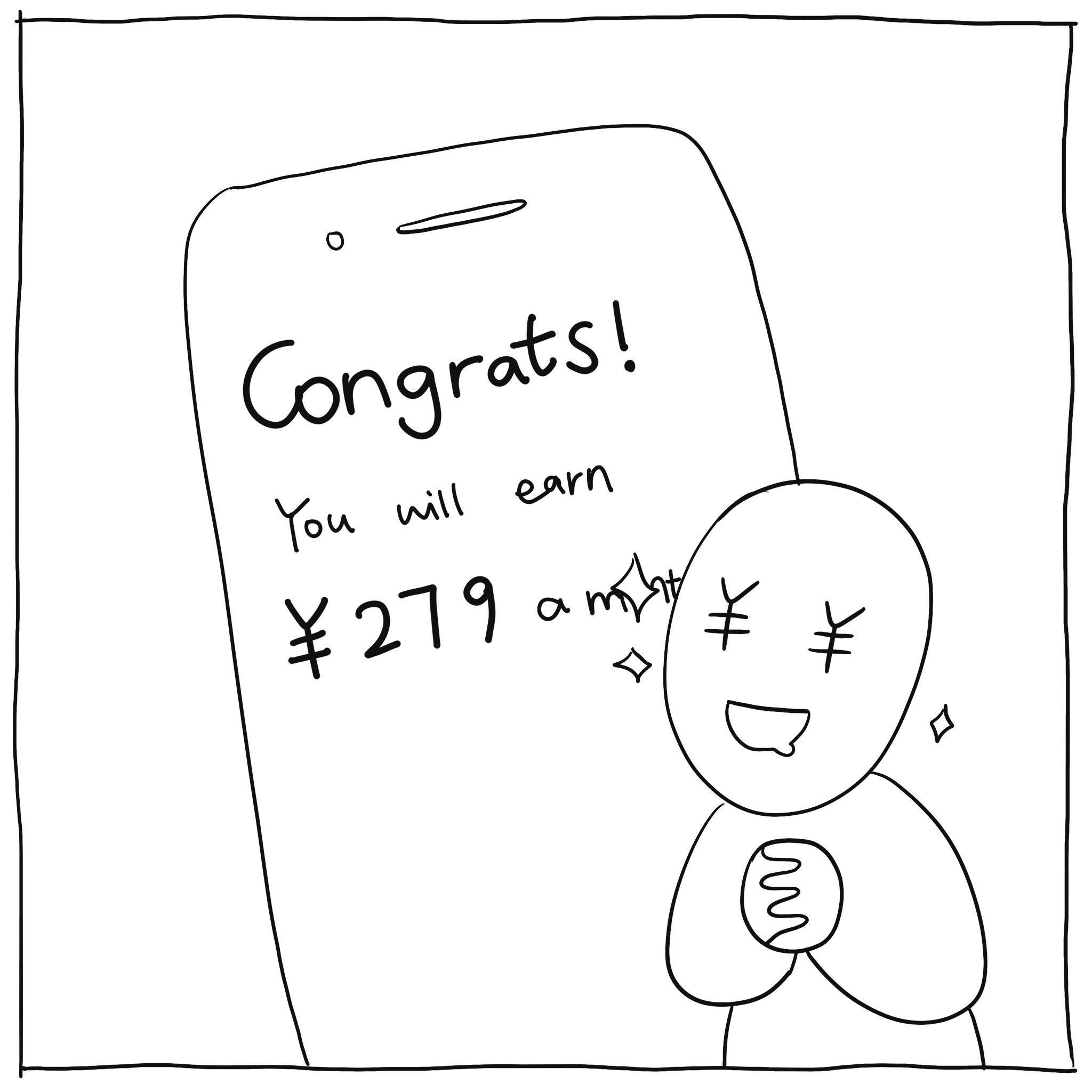
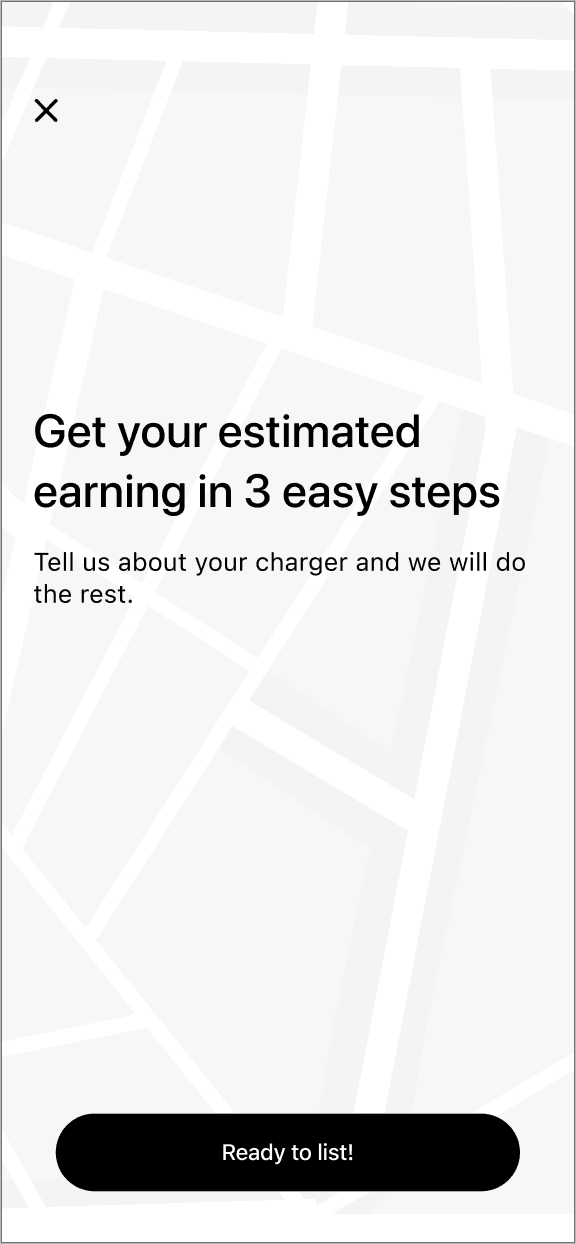
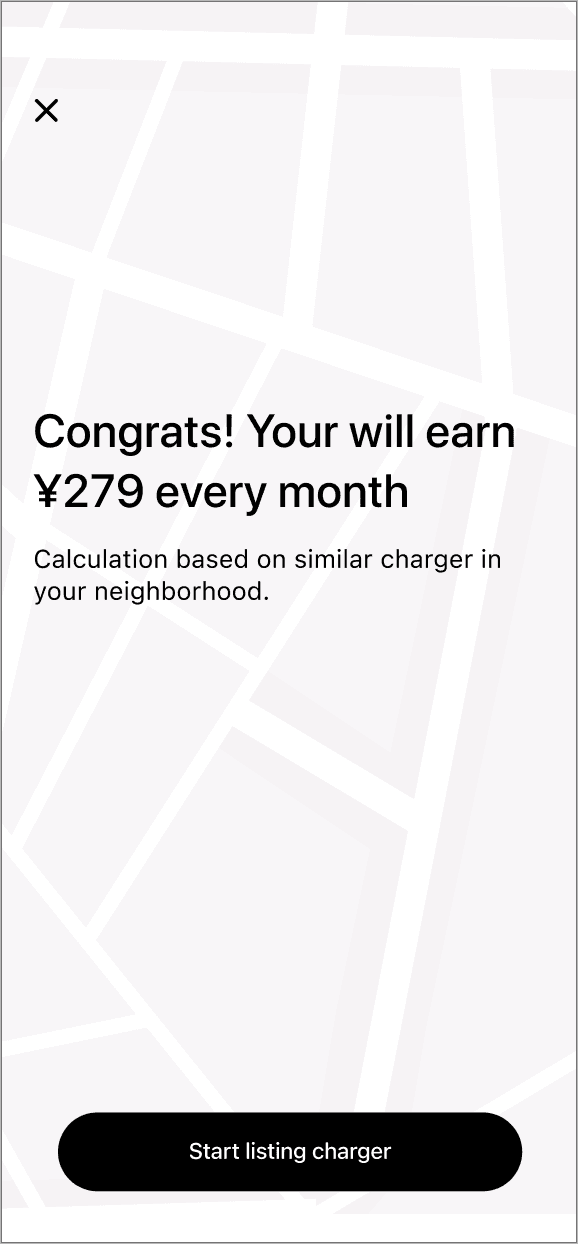
Show the estimated earned money at the every beginning to encourage hosts to continue.
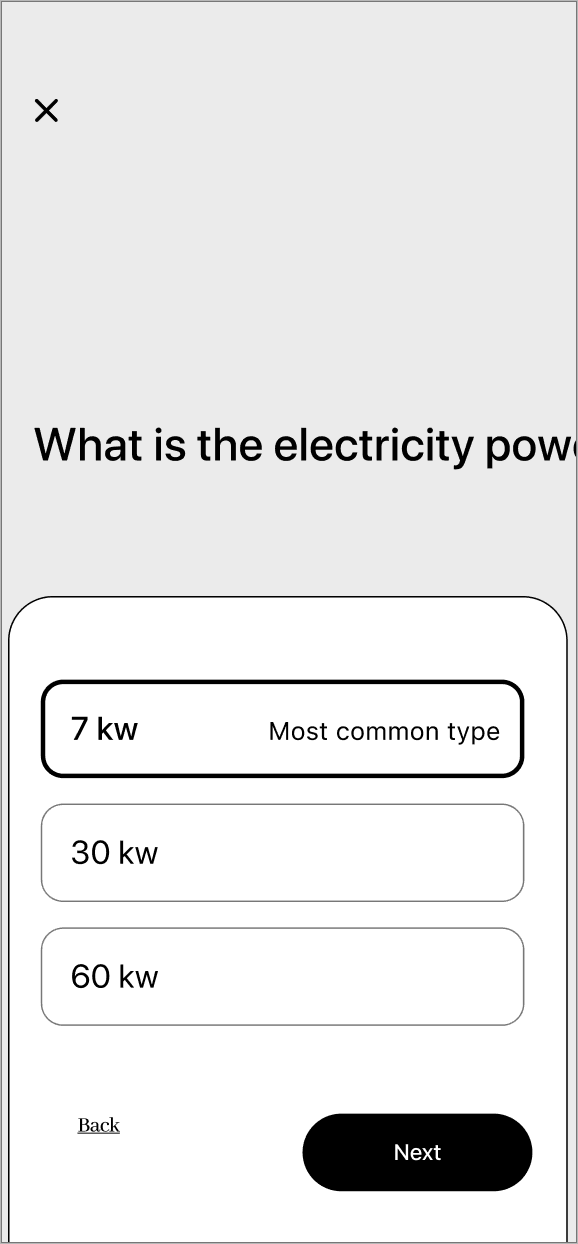
Make the listing process logic and clear.
Show complete pile information to choose.
Create accessible and friendly customer service for hosts in need.
Design Ideation
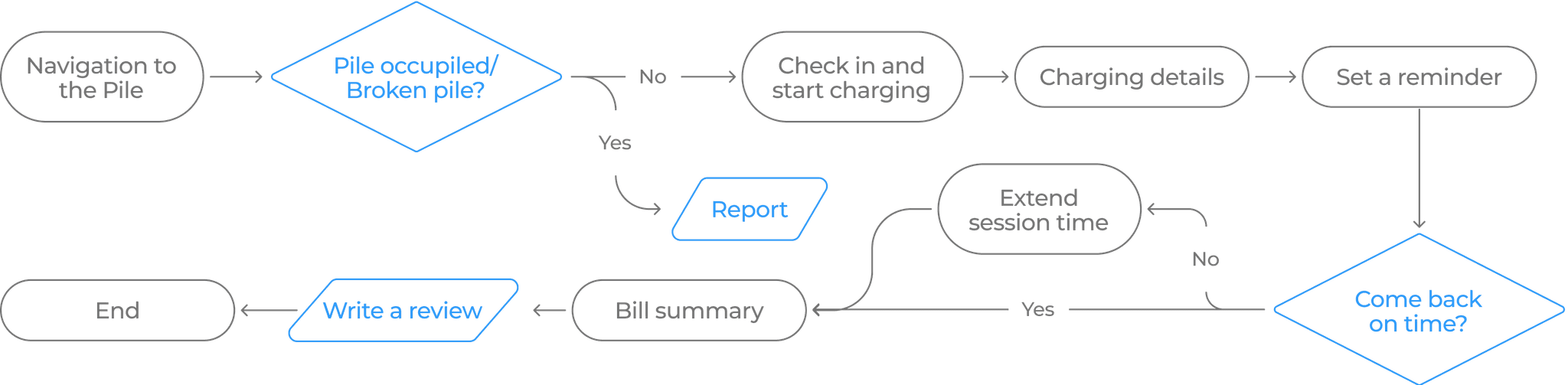
User Persona and Flow | Drivers
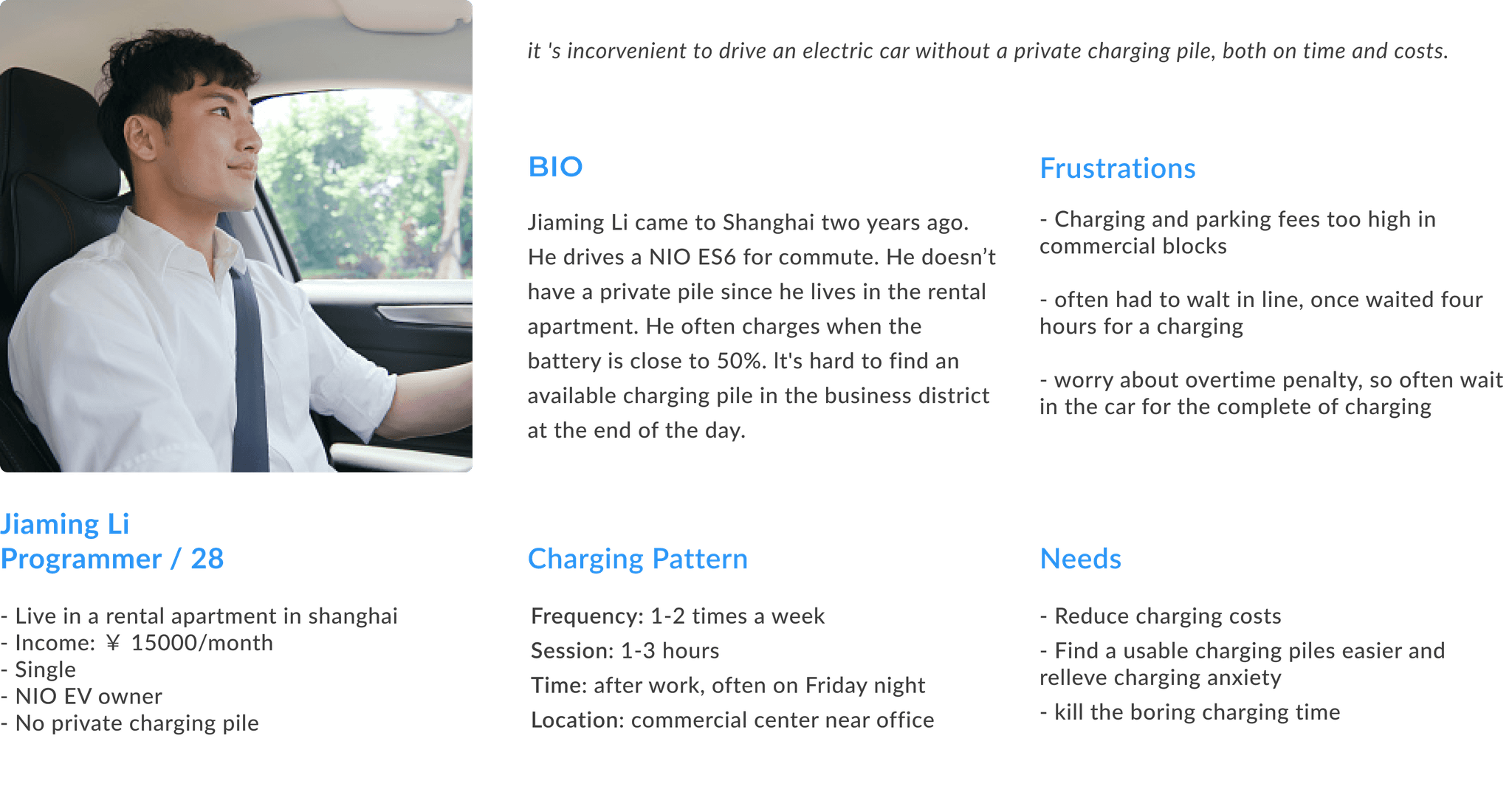
Schedule a Pile
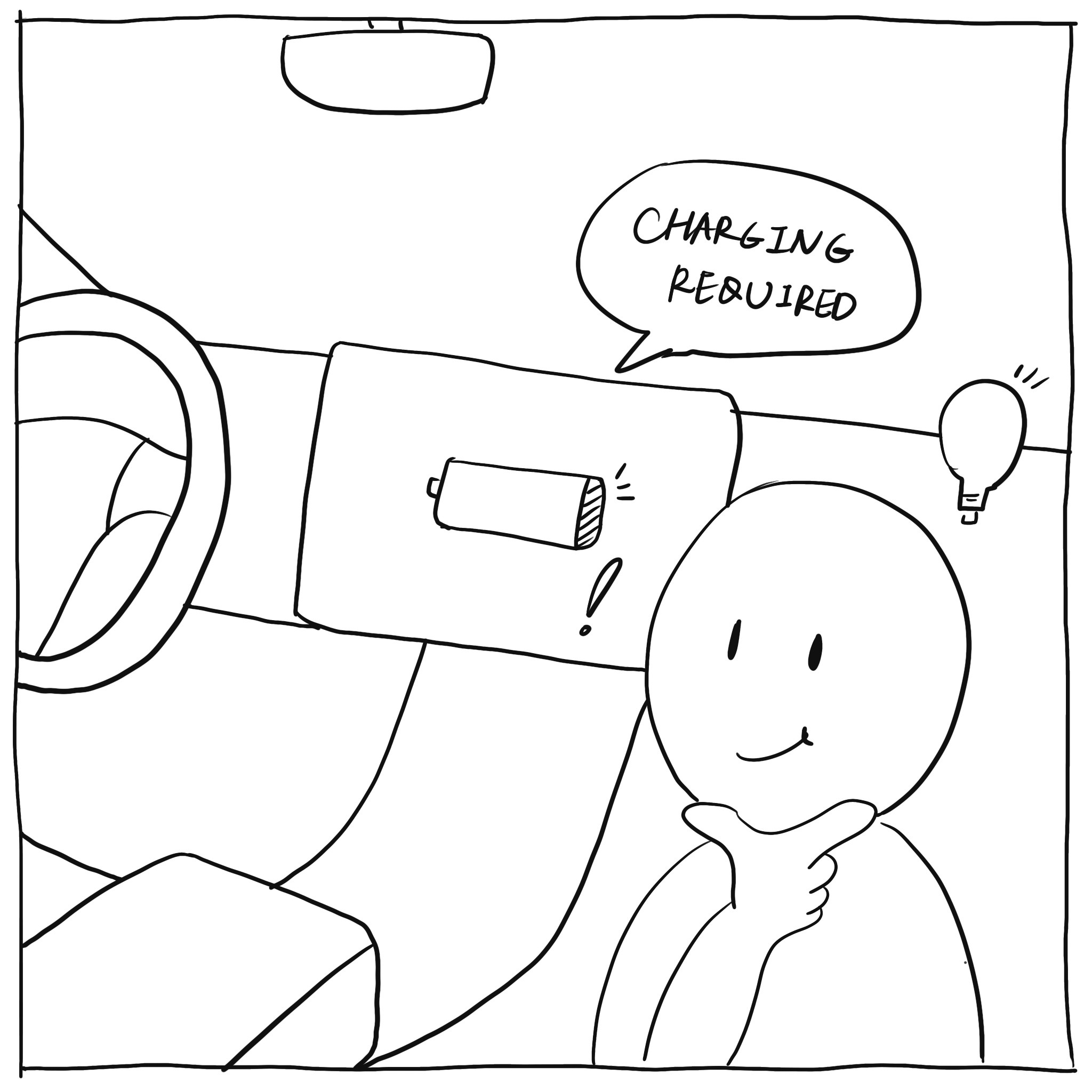
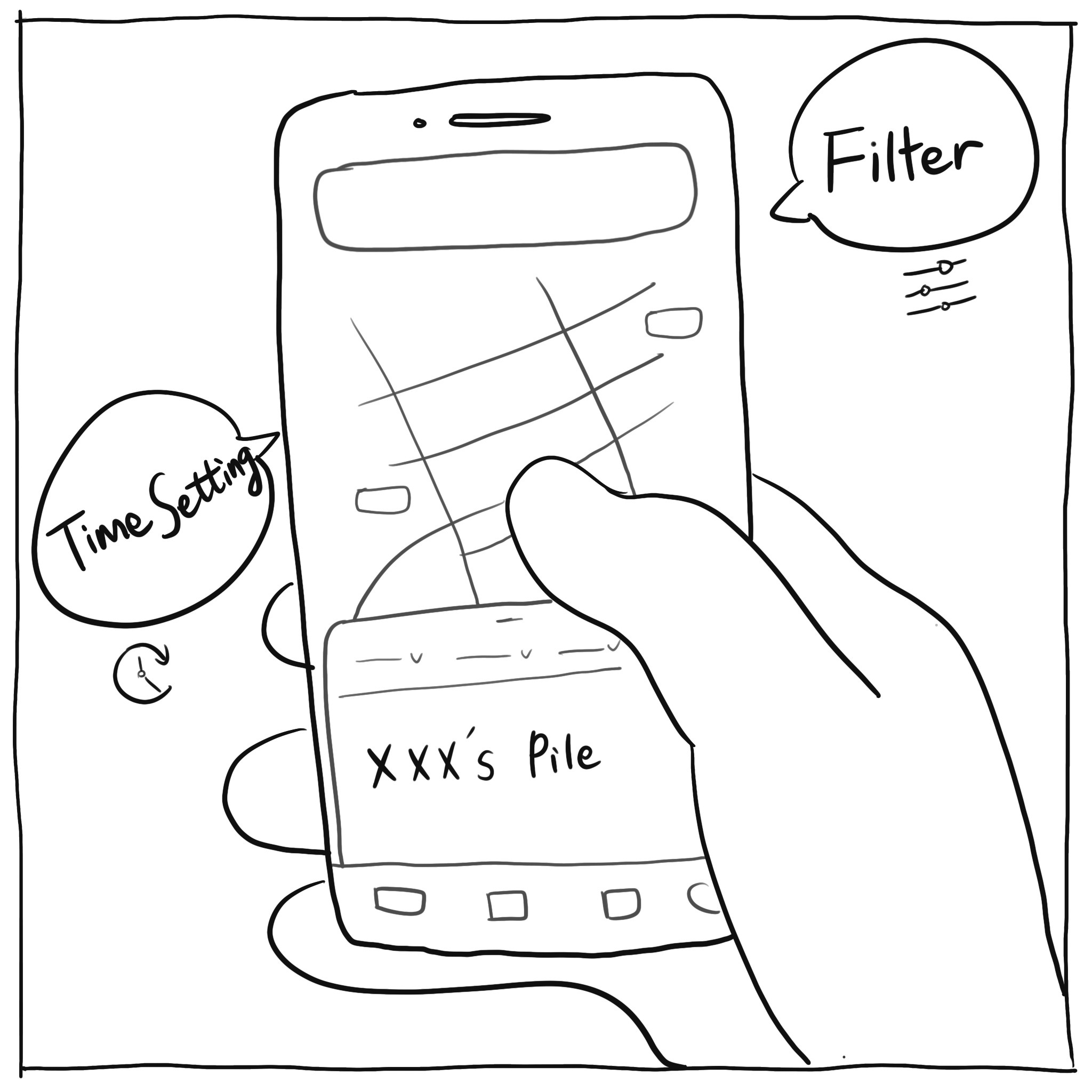
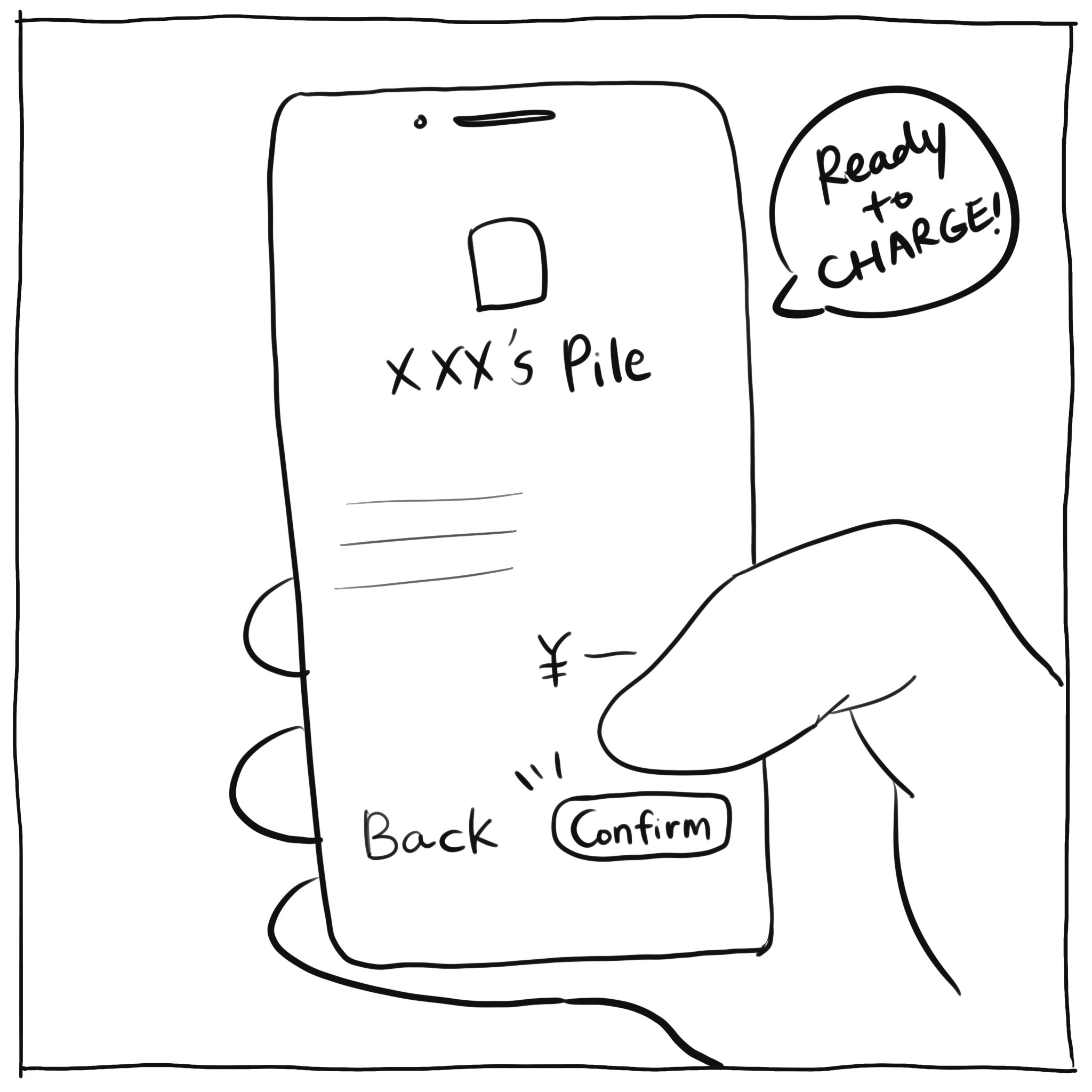


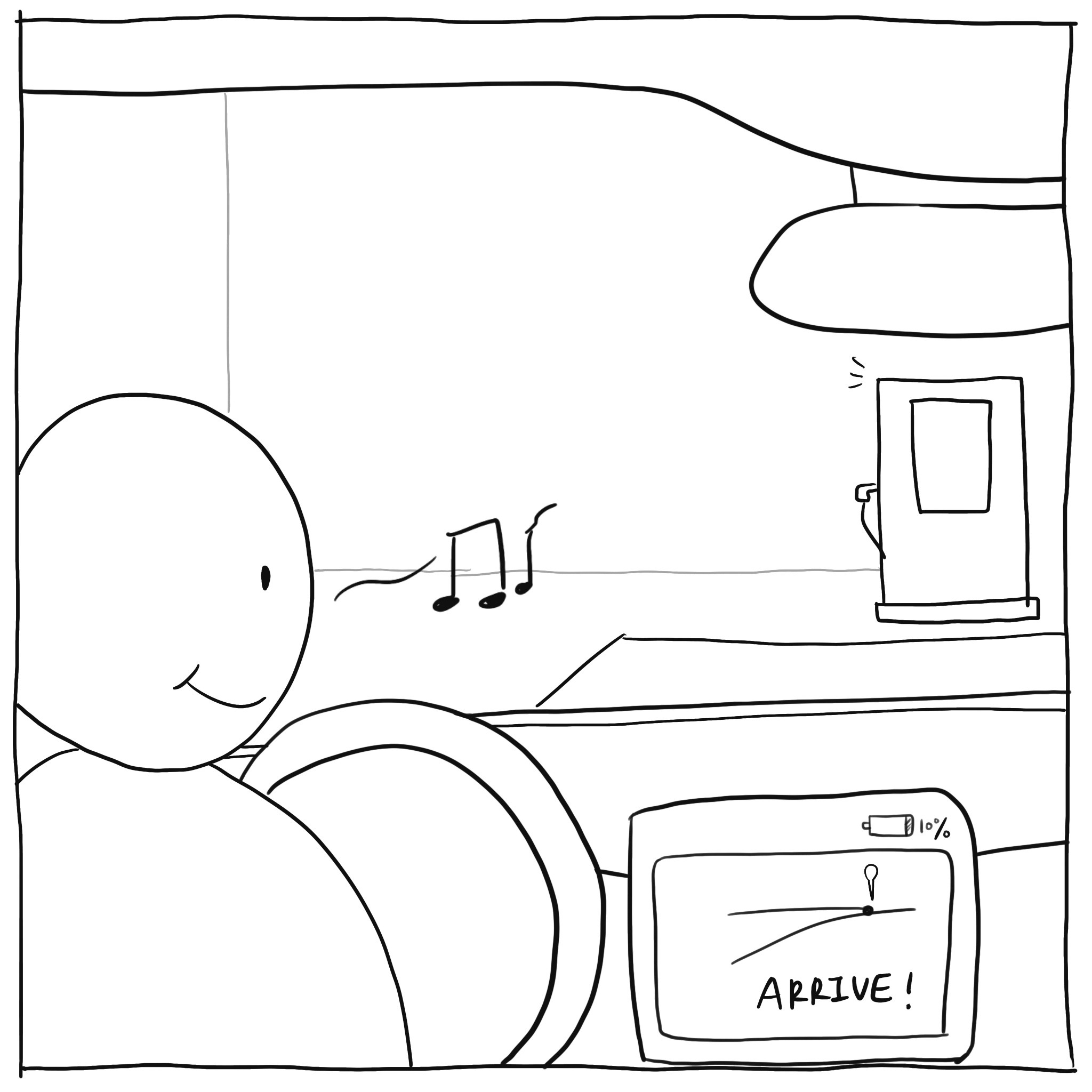
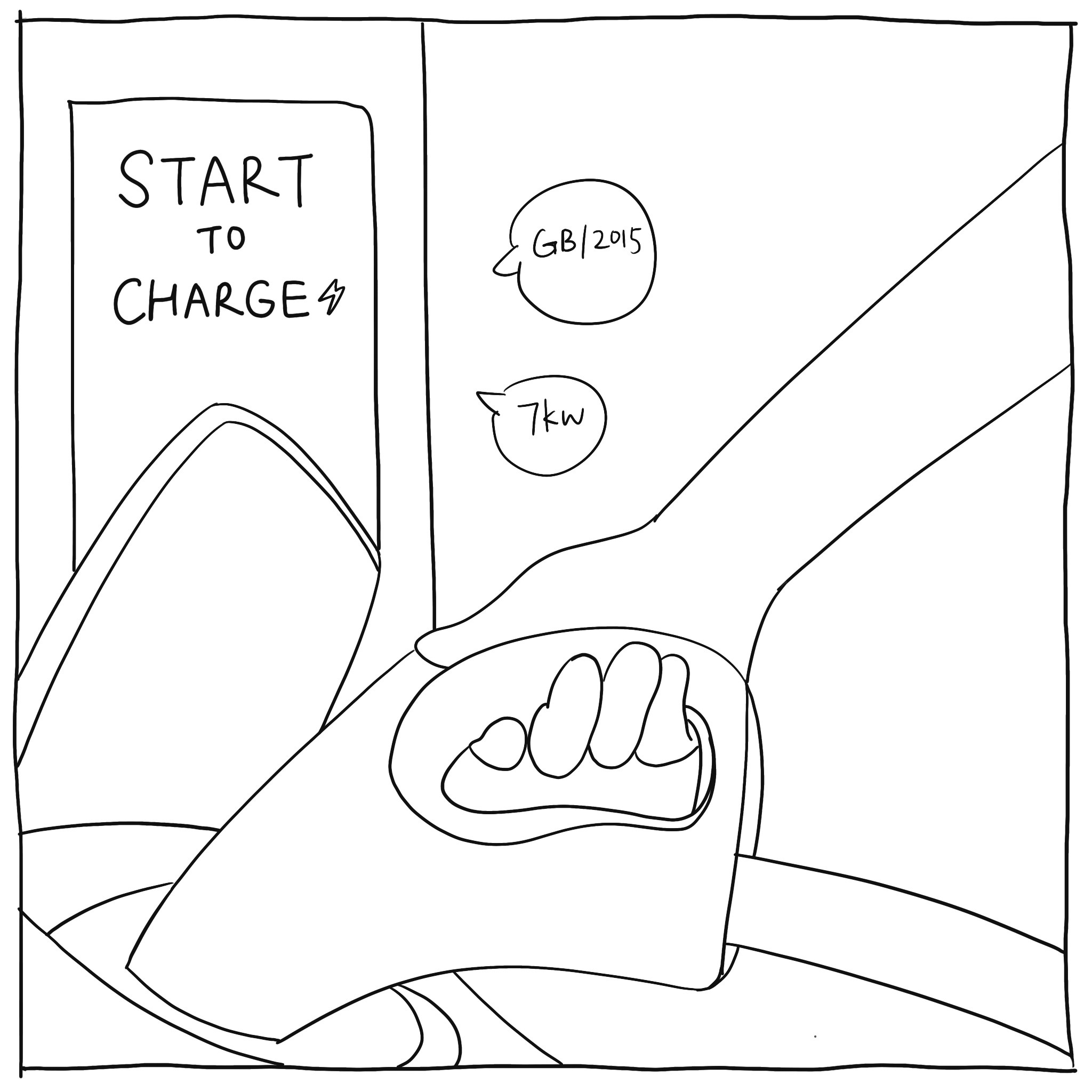
Get Charged
Design Ideation
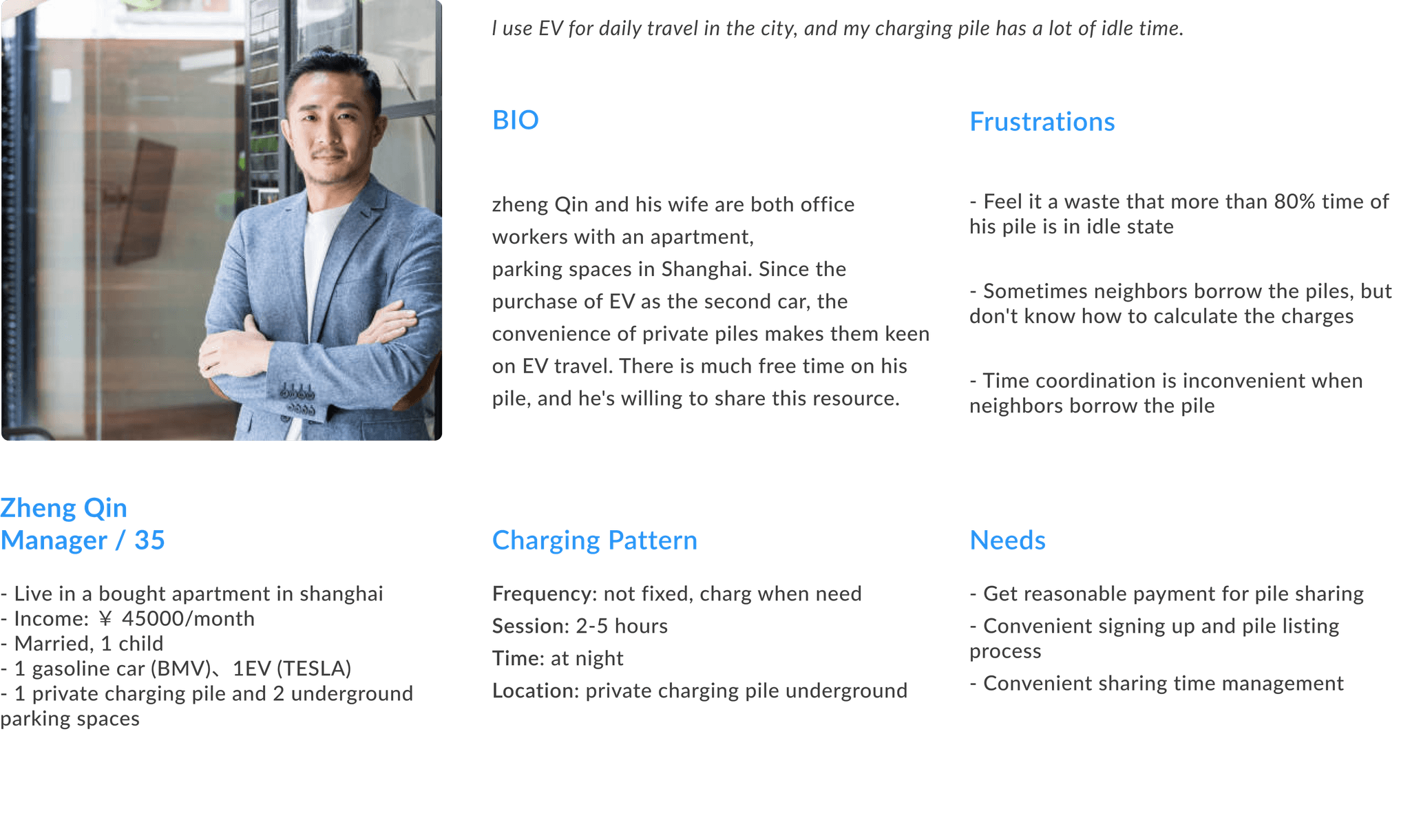
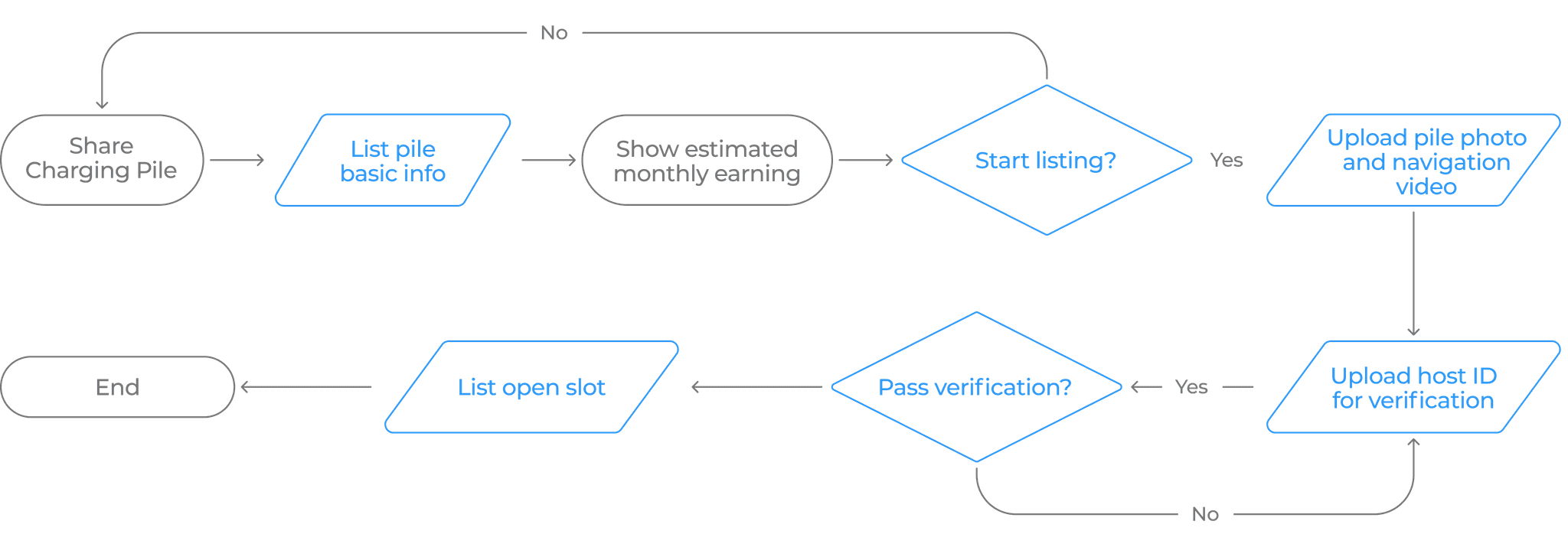
User Persona and Flow | Hosts
Schedule a Pile
UX Design
Lo-fi Prototype and Feedback
We started to work on the low-fi prototype when the ideal user experience was generated. We designed 3 processes to make sure both drivers and hosts can carry on using successfully. Meanwhile, we tried to do various designs to address different user pain points mentioned before.
1
Scheduling a Plie
Enable drivers to choose the most suitable pile to use.
√
Easy to get pile information and do the comparison with nearby ones. Like the feature showing the amenities.
X
Numbers without units on the map made users confused. They didn’t get that the card at the bottom could be dragged out.
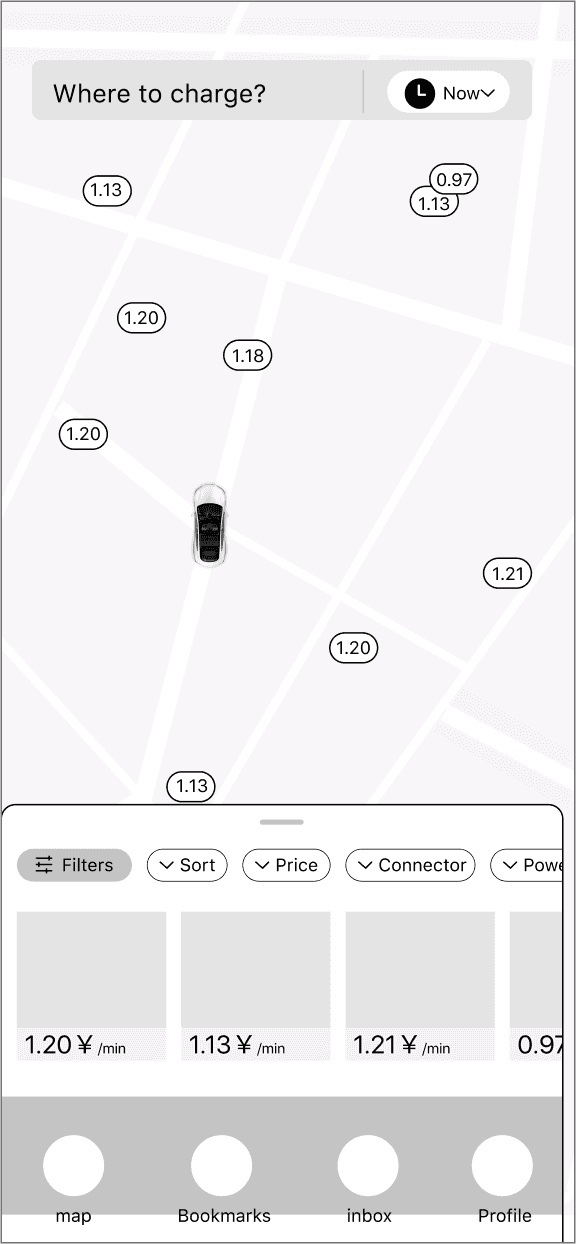
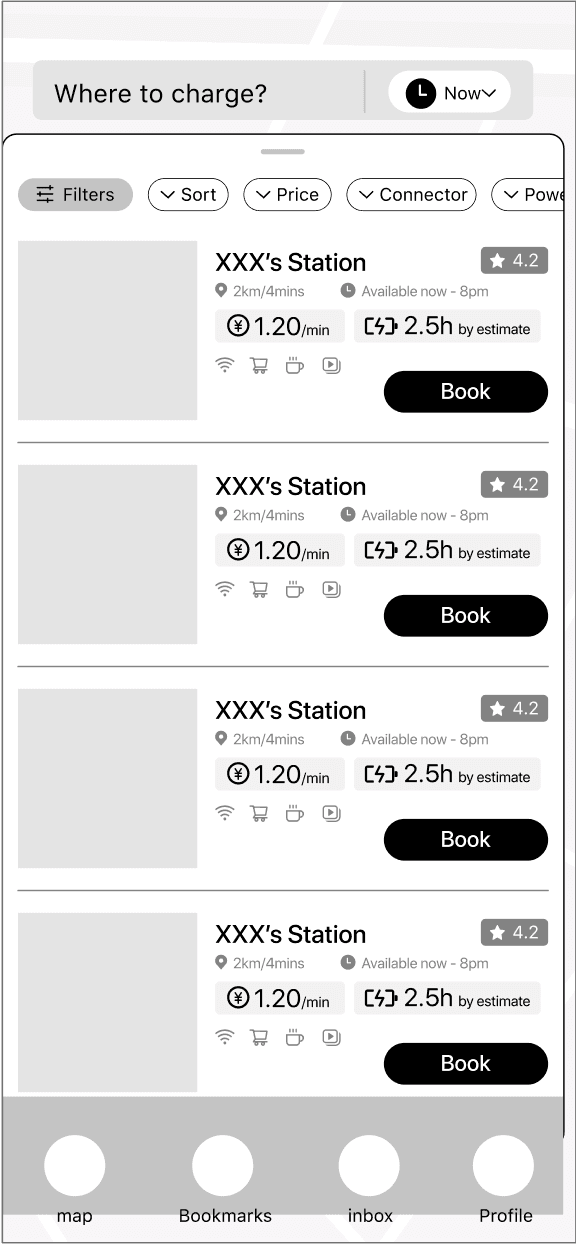
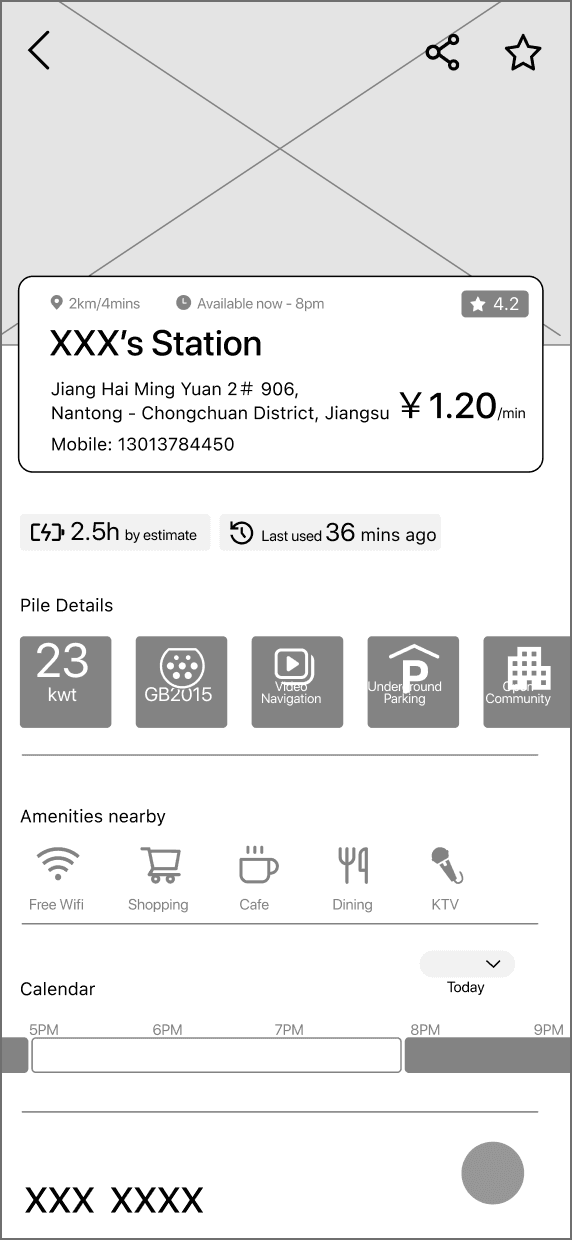
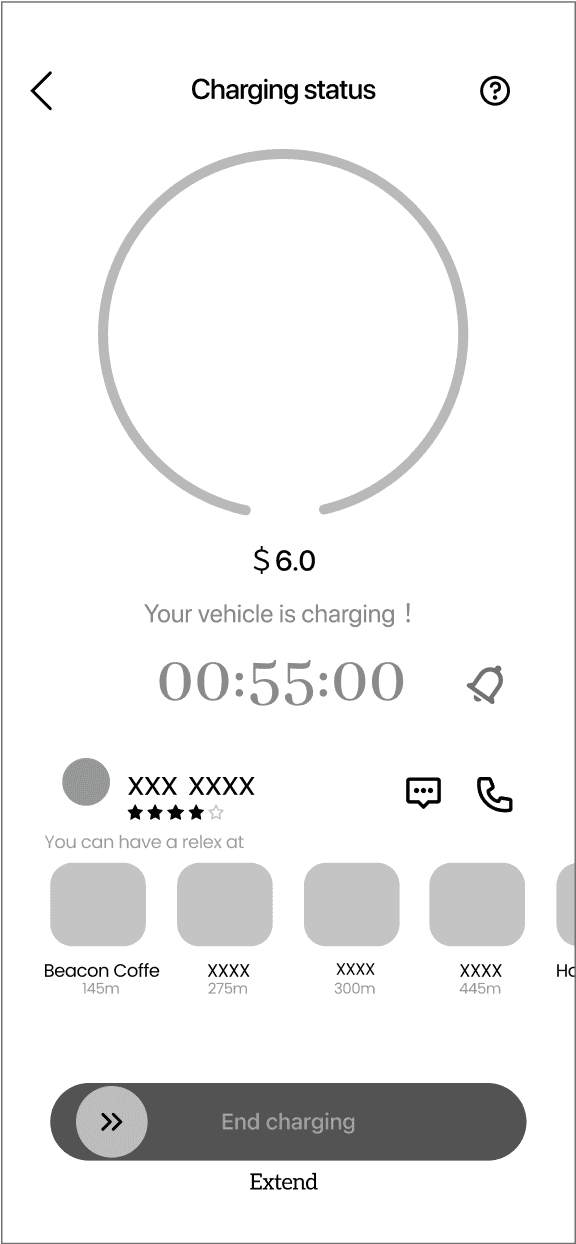
2
Scheduling a Plie
Enable drivers to choose the most suitable pile to use.
√
Easy to get pile information and do the comparison with nearby ones. Like the feature showing the amenities.
X
Numbers without units on the map made users confused. They didn’t get that the card at the bottom could be dragged out.
3
Listing a Plie
Make the listing pile process easy and logical to do and encourage hosts by showing the estimated money.
√
Feel free to just follow each step instead of filling a form.
X
Feel worried about the time conflicts with drivers.
UX Design
Design System
UX Design
Hi-fi Prototype
After the collection of feedback from the low-fi prototype, we started to create the interaction between the users and the Sharge platform. We paid attention not only to the visual stuff but also to the accessibility and hoped both drivers and hosts could enjoy the use.
Schedule a plie
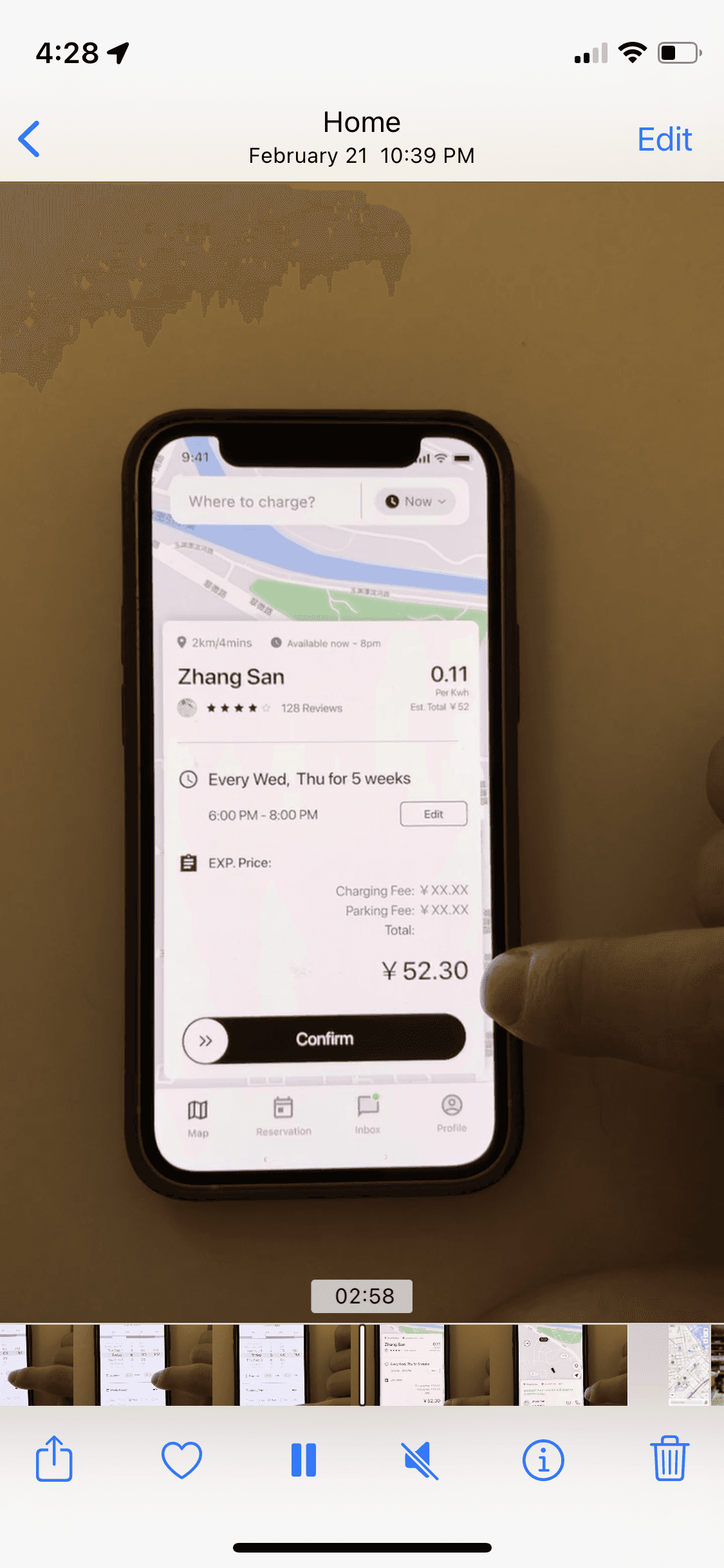
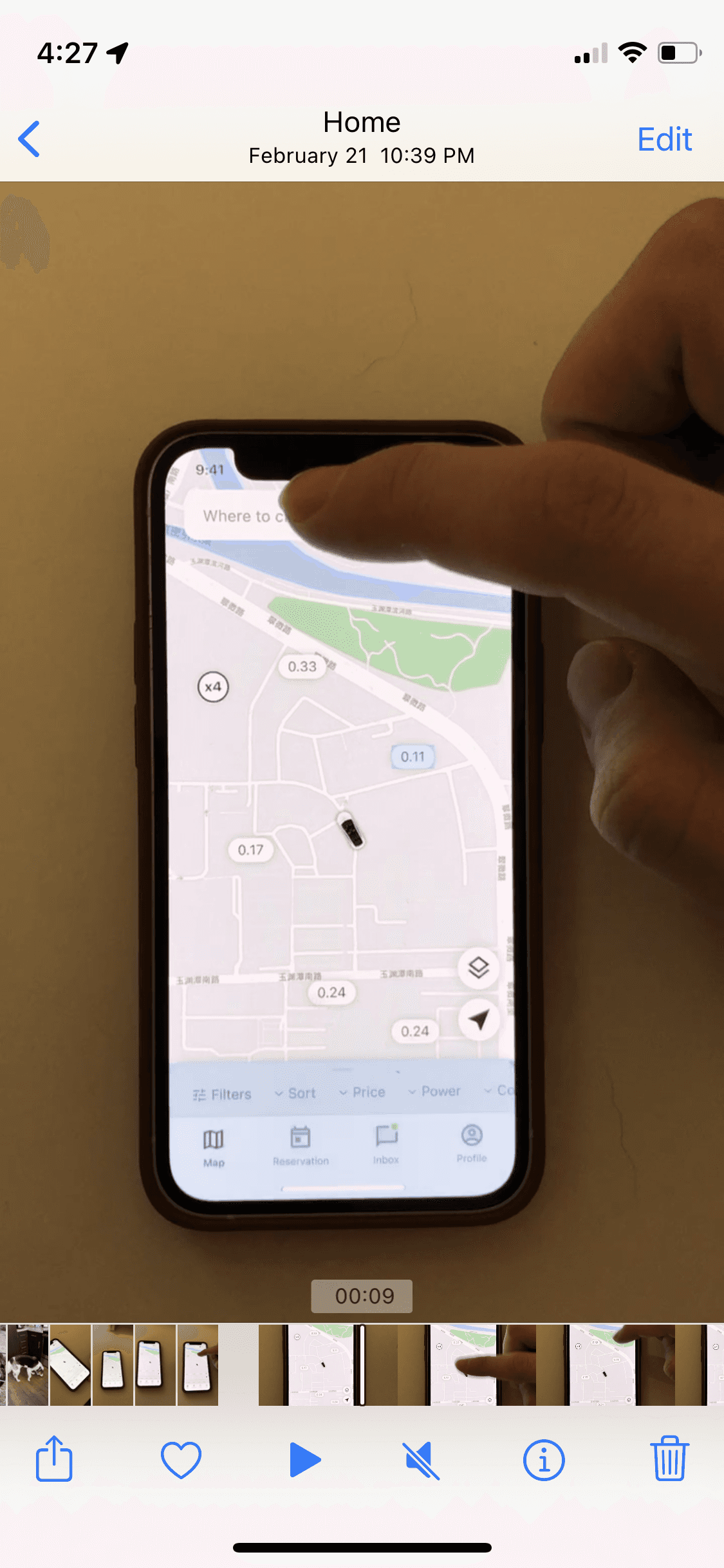
Drivers can get the pile information not only through the map but also through the plie lists and different forms of the display have a different emphasis. Complete information such as basic pile information, amenities nearby, and reviews on the list enables drivers to decide the most suitable one. The new order will eventually appear on the reservation list.
Get charged
Now you can scan to get charged when you get to the parking lot! Sharge will tell you your starting time and ending time and the only thing you should do is swipe the button to get started! The animation makes the charging process interesting and exciting. Sharge provides some suggestions about nearby facilities for you to kill the boring time. After the finish of charging, your order will be categorized in the past.
List a plie
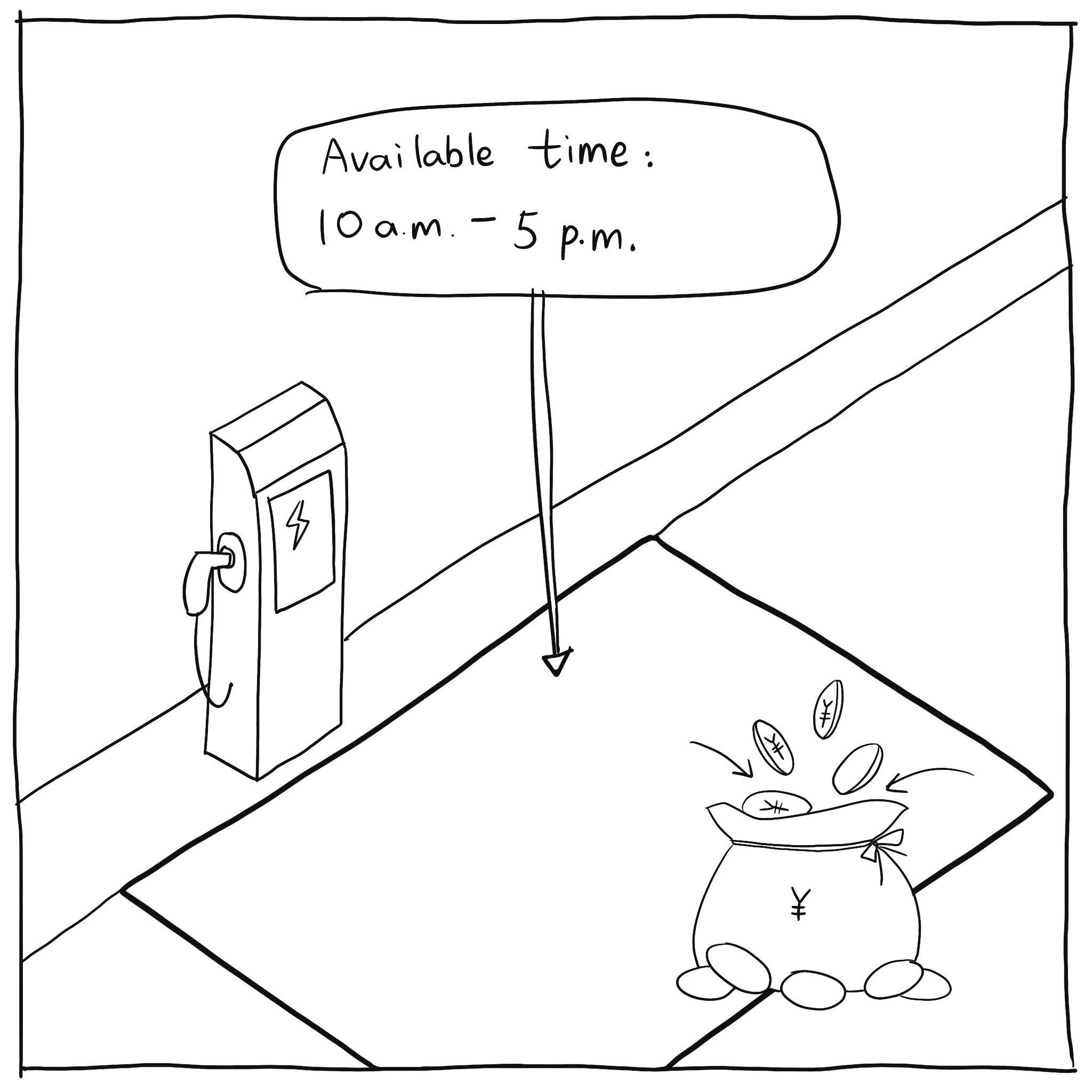
We hope the process of listing piles could be logical and clear and reduce your stress when you post your pile! Sharge provides complete information about the charging pile for you to choose the correct one. At the same time, the platform encourages you to post videos and photos to better display your pile and location, which will decrease the possibility of conflicts from drivers.Also, since this is your pile, your time of using the pile should be placed first. The calendar system enables you to manage your time and show the available time for others.
UX Evaluation
Usability Testing
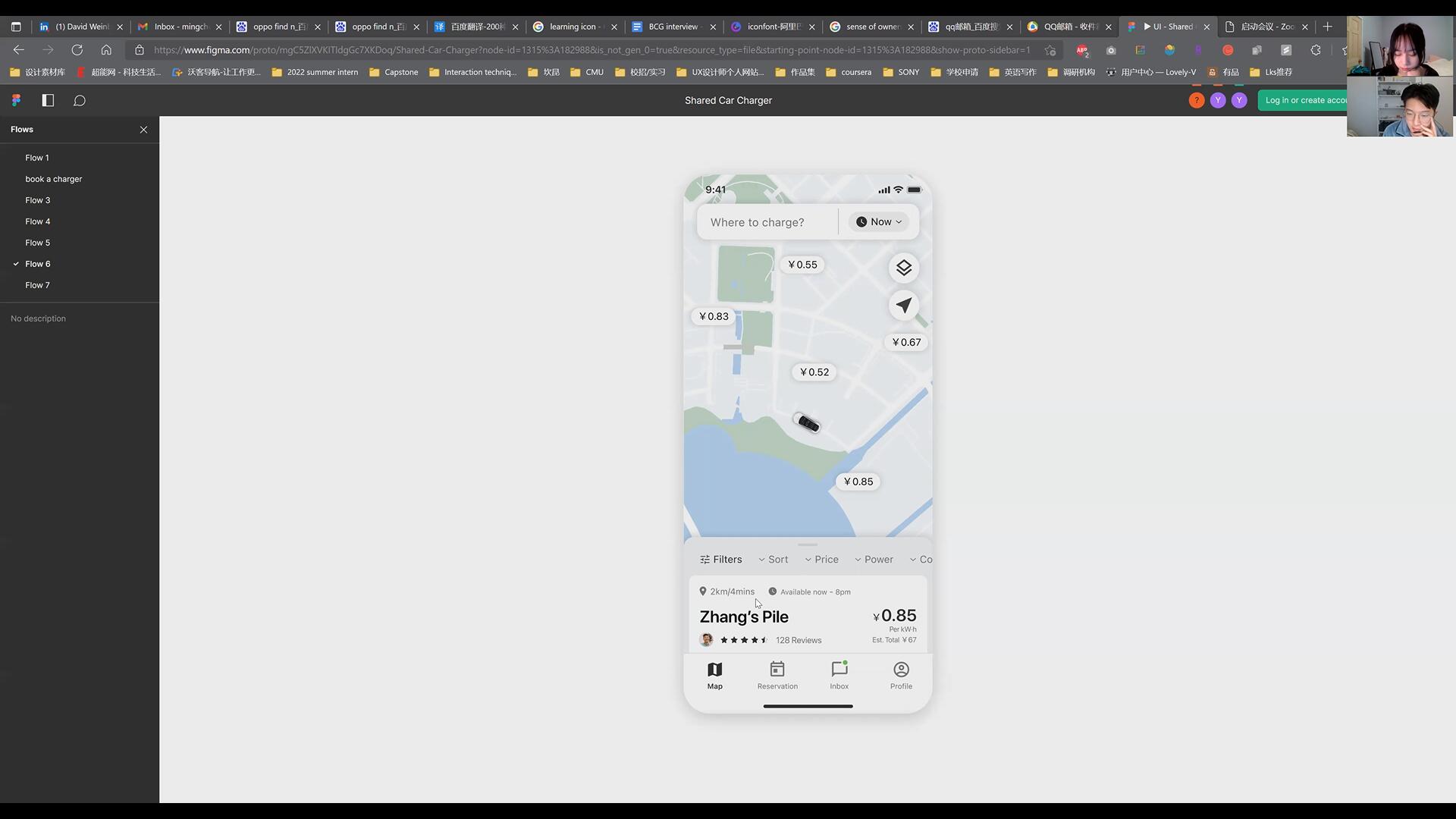
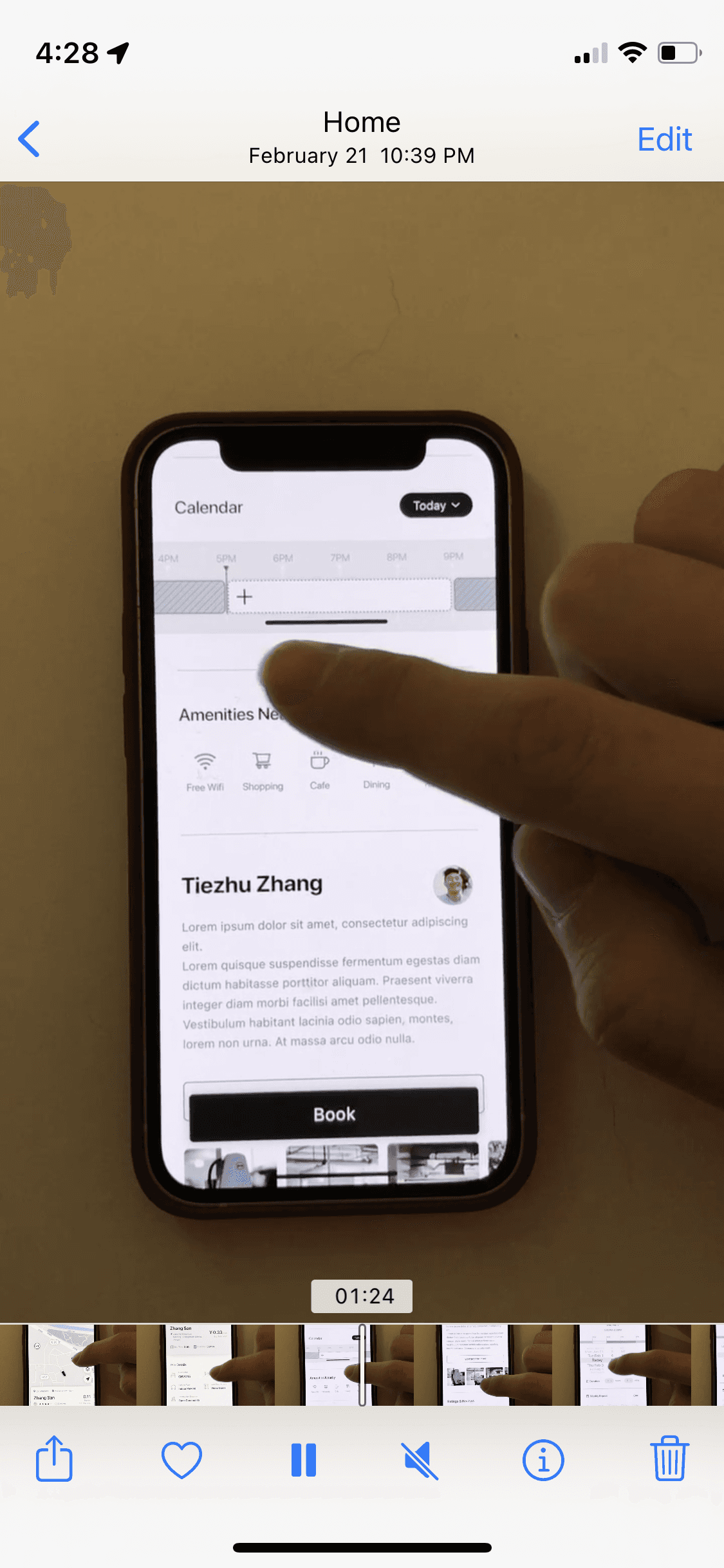
2 EV car drivers and 2 UX designers help us to carry on the usability testing. Their cooperations cover the entire process of using the APP as both driver and host. Each testing lasted for about one hour and Figma prototype helped to complete the whole experience.
We conduct task-based testing to make sure if our app could work well. All the participants were asked to think aloud to show their true feelings during the test. Also they shared a bunch of inspiring opinions after testing.
01
Scheduling a Plie
√
Love the form of card to display pile information. Feel easy to book a pile.
X
Too much context on the page of Pile and hard to get the main information. Feel a little bit impatient of too much animation that appearing from bottom to top.
02
Getting Charged
√
Consider the animation of getting charged super cool and interesting.
X
Feel a little bit confused about the calendar. The most important information is not so easy to get before scanning the code.
03
Listing a Plie (host)
√
Clear logic and easy for new hosts to use.
X
Users feel a little bit worried if they could save the hosting process or not since they had to photograph their parking space, pile, and the last mile navigation.
UX Evaluation
Reflection
This project inspired me a lot. It gave me the chance to think about the design with 2 different target users and provide a better user experience for both of them. Honestly, it was a real challenge since you have to care about 2 separate perspectives and dig into their true needs.
Also, I enjoyed it so much when I had an interview with different people. I found it was interesting to chat with people and finally got what I didn’t pay attention to before. The project is based on user experience so that user engagement does play a crucial role in the design process.
If I had more time, I would think about how to make all the processes like scheduling a plie, getting charged, and listing a plie become more accessible. Also, I am thinking that maybe there is too much information in some cases which makes me take the readability into consideration.